
How Does a Cash Counting Machine Detect Fake Currency Notes?
If you've ever watched a cash counting machine flag a note and stop mid-count, you've probably wondered how it actually knew something was wrong. There's no person checking the bill, no magnifying glass, no held-up-to-the-light moment. Just a quiet beep and a rejected note sitting off to the side.
7/3/20264 min read
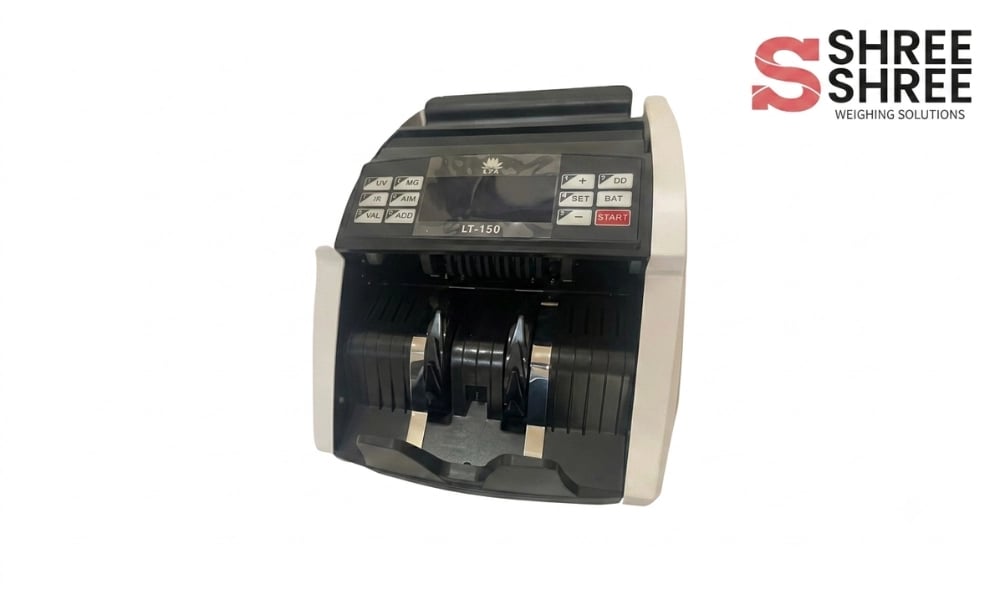
That moment is the whole point of the machine. Businesses that handle cash all day retail stores, banks, restaurants, ticket counters can't afford to manually inspect every note for authenticity. A currency counting machine does that job automatically, and it does it faster and more consistently than a human ever could. But the "how" behind it is more interesting than most people realize.
Let's break down what's actually happening inside these machines when they catch a fake.
Counting and Authentication Are Two Different Jobs
It helps to separate two things that often get bundled together: counting money and verifying it's real. Some basic machines only count they tell you how many notes you have and add up the value. Others, especially anything marketed as a counterfeit-detecting cash counting machine, do both at once.
These machines don't just count fast they scan each note as it passes through, checking for the physical and chemical properties that genuine currency is known to have. If a note doesn't match, the machine flags it and usually stops the batch so you can pull it out.
This is the feature that makes a real difference for businesses. Counting speed is nice, but catching a counterfeit before it gets deposited or handed back out as change is what actually protects your bottom line.
Ultraviolet (UV) Detection
This is one of the most common detection methods, and it works because most legitimate currency includes security features that are invisible under normal light but glow under ultraviolet light.
Genuine notes often have UV-reactive threads, patterns, or ink woven into specific areas of the bill. A machine equipped with UV sensors shines ultraviolet light on the note as it passes through and checks whether those features light up correctly.
Counterfeiters using standard printers and paper almost never replicate these UV properties accurately. Even high-quality fake notes tend to either glow incorrectly or not glow at all in the right spots, which is an easy giveaway for the machine.
Infrared (IR) Detection
Infrared detection works a bit differently. Instead of looking at what glows, it looks at how ink absorbs infrared light. Certain inks used in genuine currency absorb infrared light in specific, predictable patterns, while other parts of the note reflect it.
A cash counting machine with IR sensors reads this pattern and compares it to what's expected for that currency. Counterfeit notes, especially those made with regular commercial printers, typically use ink that behaves completely differently under infrared light, even if the note looks convincing to the naked eye.
This method is particularly useful because it's very hard to fake. You can print a bill that looks right and even feels close to right, but replicating the exact infrared absorption of official currency ink is a different challenge altogether.
Magnetic Ink Detection (MG or MICR)
Some currencies use magnetic ink in certain areas of the note, often in numbers, symbols, or specific printed elements. This is sometimes called MICR Magnetic Ink Character Recognition and it's more common in specific denominations or currencies where security is a high priority.
A machine with magnetic sensors detects whether the ink in those areas has the correct magnetic signature. Since magnetic ink requires specialized formulation, it's another feature that's difficult and expensive for counterfeiters to reproduce accurately.
If a note is missing that magnetic signature where it should be present, the machine treats it as suspicious and rejects it.
Size and Thickness Detection
Not all counterfeit detection relies on ink or light. Some of it comes down to basic physical measurement.
Genuine currency is printed on a specific type of paper, or in some cases a polymer, with a very consistent thickness and size. A currency counting machine can measure these dimensions as the note passes through, checking whether it matches the expected specifications for that denomination.
If a note is even slightly too thick, too thin, or off in size, the machine can flag it. This might sound like a small detail, but counterfeiters often use paper that's close but not identical to genuine currency stock, and that difference is measurable even when it's not visible to the eye.
Image and Pattern Recognition
More advanced machines go a step further by scanning the note and comparing its printed image against a stored reference pattern. This includes checking fine details like watermarks, portraits, serial number formatting, and specific design elements that are difficult to replicate precisely.
This works a bit like the AI-driven detection you'd expect in modern security systems, though the underlying goal is simple: catch small inconsistencies that indicate the note wasn't produced using official printing methods.
Even minor misalignments or blurred details that a person might overlook can be picked up instantly through this kind of pattern comparison.
Why Machines Catch What People Often Miss
It's easy to assume a careful employee could catch counterfeit notes just by paying close attention. In practice, that's a lot harder than it sounds.
High-quality counterfeits can look and feel convincing at a glance, especially in a busy environment where cash is moving quickly through someone's hands. A cashier dealing with a long line isn't going to hold every bill up to the light or study the texture of the paper.
A machine doesn't get tired, distracted, or rushed. It applies the same checks to every single note, every single time, in a fraction of a second. That consistency is really the core advantage not that the technology is flashy, but that it removes human error from a task where a single missed fake can cost real money.
What This Means for Businesses
For any business handling significant cash volume, investing in a currency counting machine with built-in counterfeit detection isn't just a convenience. It's a practical safeguard.
Think about a retail store that processes hundreds of transactions a day, or a restaurant that handles cash tips and payments constantly. Even a small percentage of counterfeit notes slipping through can add up to a real financial loss over time, not to mention the hassle of reporting and replacing fake currency once it's discovered.
A good cash counting machine essentially acts as a second layer of security, catching what a busy staff member might miss during a normal shift. It's one of those tools that pays for itself quietly, simply by preventing losses you'd never have known were coming.
A cash counting machine doesn't rely on just one trick to catch fake notes. It combines several detection methods UV light, infrared readings, magnetic ink checks, physical measurements, and pattern recognition to build a fuller picture of whether a note is genuine. Each method targets a different security feature, and together they make it extremely difficult for counterfeit currency to slip through undetected.