
Why Accuracy Matters in Pocket Weighing Scales
Discover why accuracy is crucial when buying a pocket weighing scale. Learn how precise measurements protect your investments, whether you weigh gold, gems, medications, or mail. Read now!
5/27/20267 min read
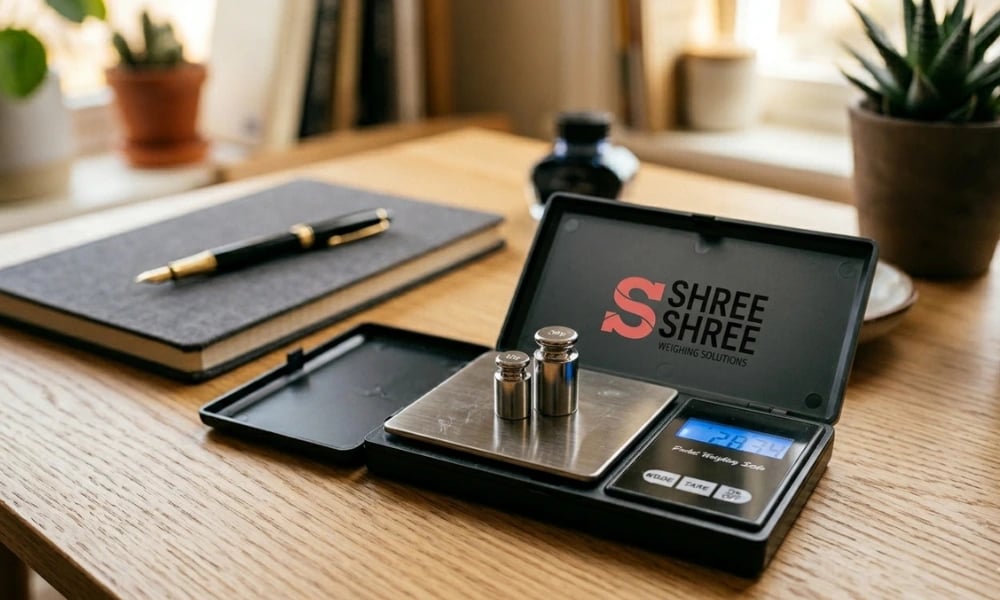
This is exactly why accuracy matters in pocket weighing scales and most people only realize it after they have already lost money, damaged relationships, or made costly mistakes. Whether you are a jeweler, a chemist, a cook, or someone who ships packages daily, your pocket weighing scale is silently making decisions that impact your wallet and reputation.
In this guide, I will walk you through why precision is not just a technical specification but the most critical factor when you buy pocket weighing scale equipment. You will learn what affects accuracy, how to test it, what features matter, and how to choose the best pocket weighing scale for your specific needs without overspending.
What Actually Is Accuracy in a Pocket Weighing Scale?
Let us get technical for a moment, but keep it simple.
Accuracy in a pocket weighing scale refers to how close the displayed weight is to the actual true weight of an item. Most pocket scales display weight in grams, and they come with a tolerance level usually written as something like ±0.1g or ±0.01g.
If you place a 10-gram weight on a scale with ±0.1g accuracy, the reading could show anywhere between 9.9g and 10.1g. That might seem like a tiny margin, but when you are dealing with expensive materials, that tiny difference adds up fast.
Think about it: at ₹5,000 per gram of gold, a 0.1g error costs you ₹500. A 0.5g error? That is ₹2,500 gone not chump change for most people.
This is why precision matters, and why buying the cheapest pocket weighing scale price you find online rarely ends well.
Real-World Situations Where Accuracy Makes or Breaks Your Day
Scenario 1: The Jeweler Who Lost a Customer
A jeweler in Jaipur was using an inexpensive mini scale for gold weighing to determine prices for customers. He purchased a budget digital gram weighing scale online for just ₹800, thinking it would do the job.
The problem? His scale was reading 5% high consistently. A customer who trusted him brought in gold jewelry to sell. Based on the inflated reading, the jeweler offered ₹15,000. When the customer later got the same item weighed at a professional assay lab and discovered the real value was ₹14,200, she never returned. She also told her friends about the experience.
That ₹800 savings cost him a loyal customer and potentially thousands in future sales.
Scenario 2: The Online Seller Shipping Without Precision
An Etsy seller in Bangalore was selling handmade resin jewelry. She used a basic portable jewelry weighing scale to calculate shipping costs. Her scale was reading about 15% light.
Over six months, she undercharged shipping on roughly 200 orders. At an average undercharge of ₹40 per order, she lost approximately ₹8,000 money that came straight out of her profit margin. She could have bought a high precision pocket scale ten times over with that amount.
Scenario 3: The Chef Whose Recipe Failed
A home cook experimenting with baking was following a recipe that required exactly 200 grams of flour. His digital gram weighing scale was reading 10 grams light. The resulting cake came out dense and flat. He was convinced the recipe was wrong.
He blamed the internet, discarded the recipe, and gave up on baking entirely for months. All because his accurate digital pocket scale was anything but accurate.
These stories are not rare. I hear versions of them constantly from people who learn the hard way that not all pocket weighing scale devices are created equal.
What Affects Accuracy in Pocket Weighing Scales?
Understanding the factors that influence precision helps you make smarter buying decisions and use your scale correctly.
1. Load Cell Quality
The load cell is the heart of any pocket weighing scale the tiny component that actually measures weight. Cheap load cells wear out quickly, especially if you drop the scale or use it consistently near its maximum capacity. High-quality professional pocket scale models use strain gauge load cells that maintain accuracy over thousands of uses.
When you buy pocket weighing scale online, check whether the product description mentions the load cell type. If it does not, that is a red flag.
2. Calibration
Even the best high precision pocket scale needs calibration from time to time. Most modern digital scales come with built-in calibration features you place a known weight on the scale and adjust the reading to match.
If you skip calibration, expect drift. Temperature changes, battery weakness, and general wear all contribute to calibration drift over time.
3. Environmental Factors
Weighing scales are sensitive devices. Here is what can throw them off:
Air currents: Even a gentle breeze from a fan or air conditioner can affect readings.
Surface stability: Placing your scale on an uneven or soft surface (like a carpet) introduces measurement errors.
Temperature fluctuations: Moving from a cold AC room to a hot balcony can temporarily alter readings.
Static electricity: In dry climates, static buildup can interfere with readings, particularly for lightweight items.
4. Weight Capacity and Resolution
A common mistake is buying a scale with too much capacity for what you need. If you are weighing 1-gram pieces of jewelry on a scale designed for up to 500 grams, you sacrifice resolution.
Look for a scale with a capacity that matches your typical use. For jewelry, a mini scale for gold weighing with a maximum of 50 to 200 grams and a resolution of 0.01g is ideal. For larger items, go bigger but stay within the scale's comfortable range.
5. Battery Power
Weak batteries cause inconsistent readings. If you are using a rechargeable pocket weighing scale, keep it charged. For battery-powered models, replace batteries regularly especially if the display appears dim or flickering.
How to Test Your Pocket Weighing Scale for Accuracy
You do not need a professional lab to check if your scale is accurate. Here are some practical tests you can do at home:
Test 1: The Nickle Test
A standard Indian ₹5 coin (nickel) weighs exactly 6 grams. Place your coin on the scale and see if it reads close to 6g. Allow for a tiny margin (±0.01g to ±0.05g depending on your scale's class), but anything significantly off indicates a problem.
Test 2: The Multiple Item Test
Place five ₹5 coins on the scale. The reading should be approximately 30 grams. Divide the total by five to see if each appears as 6g. This tests linearity whether the scale is accurate across its range.
Test 3: The Calibration Weight Test
If you work with precious materials, consider purchasing a small calibration weight (available online for around ₹200-₹500). These are certified to specific weights and give you a reliable baseline.
Test 4: The Surface Test
Weigh an object on your scale, then place a thick book under the scale and weigh again. If the reading changes significantly, your scale is responding to an uneven surface choose a flatter location.
Performing these tests regularly ensures your accurate digital pocket scale remains reliable. Most experts recommend checking calibration at least once a month if you use your scale daily.
Why Indian Buyers Specifically Need Accuracy
India has unique considerations when it comes to weighing precision:
The Gold Market
India is one of the world is largest consumers of gold. Weddings, festivals, and investments revolve around gold jewelry and coins. A slight inaccuracy in your mini scale for gold weighing can lead to significant financial losses when buying or selling gold.
Postal and Courier Services
With the explosion of e-commerce, small sellers on platforms like Meesho, Amazon, and Etsy need to accurately calculate shipping. Overestimating weight means lost profits; underestimating means angry customers and chargebacks.
Food and Spices
From spice traders to home cooks, accurate measurement of ingredients ensures consistent taste and prevents waste. A little extra spice goes a long way, and no one wants to ruin a whole batch because their scale was wrong.
Pharmaceutical and Herbal Medicine
These industry-specific needs make accuracy in a pocket weighing scale not just convenient but essential for professionals and serious hobbyists alike.
Features That Actually Matter When You Buy Pocket Weighing Scale
With so many options available, it is easy to get distracted by flashy features that sound impressive but serve no real purpose. Here is what actually matters:
1. Accuracy Rating
This is non-negotiable. For jewelry, coins, and medications, look for a scale with at least 0.01g resolution. For general shipping and hobby use, 0.1g may suffice but always err on the side of better precision.
2. Tare Function
The tare function lets you subtract the weight of containers, allowing you to weigh only the contents. This is essential for anyone weighing liquids, powders, or small items in containers.
Does the maximum capacity comfortably exceed your typical load?
Is the readability fine enough for your precision requirements?
Does it have a tare function and is it easy to use?
Is it appropriate for the environment indoors, outdoors, wet, dusty?
Does it need to be trade-approved for your use case?
What is the calibration process and how often will you need to do it?
Is the display readable in your working conditions?
What are the power requirements battery or mains?
Does it need to connect to any other systems or software?
3. Unit Conversion
Your digital gram weighing scale should allow you to switch between units grams, ounces, carats, grains, and troy ounces. This flexibility matters for jewelry professionals and international traders.
4. Backlit Display
If you ever weigh items in low light (and you will), a backlit display makes reading measurements much easier.
5. Auto-Off and Auto-Zero
These features preserve battery life and ensure readings reset properly between uses. A rechargeable pocket weighing scale often includes more advanced power management features.
6. Build Quality
A scale with a stainless steel weighing pan and sturdy body lasts longer than plastic alternatives. If you plan to travel with your scale frequently, invest in a professional pocket scale with a protective case.
Take a moment to honestly assess what you will actually use your scale for. The best pocket weighing scale is not the most expensive or the cheapest it is the one that matches your actual requirements.
Maintaining Accuracy Over Time
Your work does not stop once you buy your scale. Here is how to keep it accurate for years:
Store it properly: Keep your scale in a protective case when not in use. Avoid dropping it or exposing it to extreme temperatures.
Calibrate regularly: Use a calibration weight at least once a month for high precision pocket scale models.
Clean the pan: Dust, oils, and residue affect readings. Wipe the weighing pan gently with a soft, dry cloth.
Replace batteries: For non-rechargeable pocket weighing scale models, change batteries every few months or immediately if the display dims.
Check for drift: Regularly perform the nickel test or use a known weight to verify accuracy.
A little maintenance goes a long way. A well-cared-for professional pocket scale can maintain accuracy for five years or more.
Do Not Let Inaccurate Scales Cost You Money
Accuracy in a pocket weighing scale is not a luxury it is a necessity. Whether you are weighing gold, shipping packages, mixing medicines, or crafting at home, precise measurements protect your money, your reputation, and your peace of mind.
The key takeaway is simple: do not base your decision solely on pocket weighing scale price. Pay attention to accuracy ratings, load cell quality, and build durability. A slightly higher investment upfront saves you significantly more in the long run.
Before you buy, define your actual needs, test the scale if possible, and choose a seller with a solid return policy. Your scale is an investment in precision and precision is what separates amateurs from professionals.
Ready to get your own accurate digital pocket scale? Start by identifying what you need to weigh, set a realistic budget, and choose a model with at least 0.01g resolution if accuracy matters for your work. Your wallet and your customers will thank you.