
Weighing Scales for Courier & Shipping Companies: Platform vs. Table Top
Walk into any courier hub or shipping office, and you'll notice weighing scales are one of the busiest pieces of equipment in the room. Every parcel that comes through needs to be weighed accurately, because shipping rates, billing, and even customer disputes often come down to that one number.
7/3/20265 min read
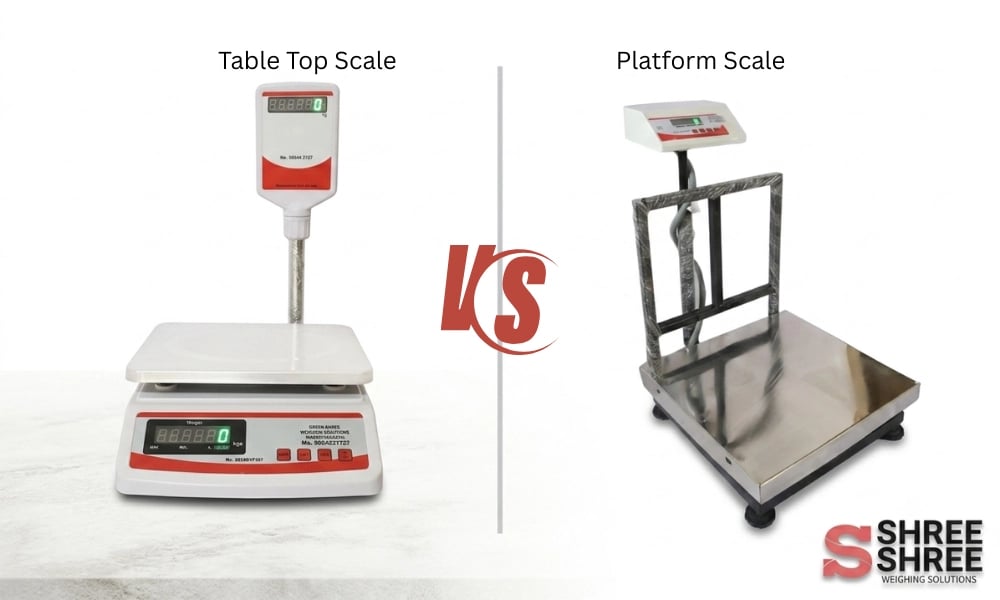
But not every business needs the same kind of scale. A courier that mostly handles envelopes and small parcels has very different needs than a logistics company moving pallets and bulky freight. That's where the choice between a platform weighing scale and a table top scale really comes into play.
Both are common in shipping and courier operations. Both do the same basic job measuring weight accurately. But they're built for different situations, and picking the wrong one can slow down your workflow or waste money on capacity you'll never use. Let's break down how they compare.
What Makes These Two Scales Different
Before getting into the details, it helps to understand the basic distinction.
A table top weighing scale is compact, sits on a counter or workbench, and is designed for smaller items. Think documents, small boxes, or light parcels that a person can lift with one hand. It's the kind of scale you'd see right at a courier counter where staff are processing walk-in customers.
A platform weighing scale, on the other hand, sits on or close to the floor and is built to handle larger, heavier items. It usually has a bigger weighing surface, a sturdier build, and a much higher weight capacity. This is the scale you'd find in a warehouse, loading dock, or sorting facility where boxes, crates, or bulk shipments need to be weighed before they head out.
The core difference comes down to two things: size of the item and weight capacity. Everything else about how you choose between them flows from that.
What Makes These Two Scales Different
If your business handles a high volume of small, lightweight packages, a table top scale is probably your best fit. These scales are designed to be fast and convenient, sitting right at the counter where staff are already processing orders, printing labels, and handling customer transactions.
Where it shines:
A courier counter dealing with envelopes, small boxes, and parcels under a certain weight limit benefits from having the scale right there, within arm's reach. There's no need to walk to a separate area or lift anything heavy. The whole process weigh, print label, hand over happens in one smooth motion.
Table top scales are also generally more precise for lighter items. Since they're calibrated for smaller weight ranges, they can often measure down to finer increments, which matters for businesses that charge based on precise weight brackets.
Where it falls short:
The obvious limitation is capacity. A table top scale simply isn't built to handle heavy or oversized items. Try to weigh a bulky package that exceeds its rated capacity, and you'll either get an inaccurate reading or risk damaging the scale itself.
Space is also a factor, though a minor one. These scales are compact by design, so they don't take up much counter space, but that also means there's a physical limit to what can even fit on the weighing surface.
Platform Scales: Built for Volume and Heavier Loads
A platform scale earns its place in businesses that deal with bulkier shipments think freight companies, warehouses, and courier operations that handle everything from small parcels to large boxes and pallets.
Where it shines:
The biggest advantage is capacity. A platform scale can typically handle much higher weights than a table top unit, often ranging from a few hundred kilograms up to several tons depending on the model. This makes it the go-to choice for businesses shipping bulk orders, industrial equipment, or palletized goods.
The larger weighing surface also matters. Odd-shaped or oversized items that wouldn't even fit on a table top scale can be placed directly on a platform scale without needing to be repositioned or measured awkwardly.
For operations that use forklifts or pallet jacks, some platform scales are designed to sit flush with the floor, allowing loaded pallets to be rolled directly onto the scale without extra lifting. This alone can save a significant amount of time and manual effort in a busy warehouse.
Where it falls short:
Platform scales take up more physical space, which isn't always practical for a small courier counter or a business with limited floor area.
They're also generally less precise for very light items. A scale built to measure loads in hundreds of kilograms often isn't calibrated to catch small weight differences in a light envelope or a few-hundred-gram parcel. If your business handles a mix of light and heavy shipments, relying on a platform scale alone could mean sacrificing accuracy on the lighter end.
Matching the Scale to Your Business
The real question isn't which scale is "better" it's which one fits how your business actually operates. A few practical questions can help clarify the decision:
What's the typical weight range of what you ship?
If most of your parcels are under 30kg, a table top scale probably covers your needs. If you're regularly shipping boxes, crates, or pallets beyond that range, a platform scale becomes necessary.
Where does the weighing happen in your workflow?
Counter-based, customer-facing operations usually benefit from the convenience of a table top scale. Warehouse or loading dock operations, where items are already being moved with equipment, are better suited to a platform scale.
Do you need to weigh both light and heavy items regularly?
Many courier and shipping businesses end up needing both. A table top scale handles the front counter for everyday parcels, while a platform scale manages the bulk shipments in the back. This combination is common in businesses that serve a wide range of customers, from individuals sending letters to companies shipping freight.
How much floor space do you actually have?
This is a practical, sometimes overlooked factor. A cramped courier office might struggle to fit a full-size platform scale, even if the business occasionally handles heavier packages. In that case, a mid-capacity platform scale or a hybrid solution might be worth considering.
A Real-World Example
Picture a mid-sized courier company that handles both retail customers and business shipping accounts. At the front counter, staff process a steady stream of individual customers dropping off documents and small parcels this is a perfect fit for a table top weighing scale, since speed and precision matter more than capacity.
In the back, the same company processes bulk shipments for business clients, sometimes including boxes weighing over 50kg. That side of the operation runs on a platform scale, positioned near the loading area where staff can roll pallets directly onto it before dispatch.
Neither scale replaces the other here. They're solving two different problems within the same business, and that's often the most practical setup for companies that don't fit neatly into one category.
Don't Overlook Accuracy and Calibration
Regardless of which type you choose, accuracy matters just as much as capacity. Shipping costs are often calculated directly from the weight reading, so even small inaccuracies can lead to billing disputes or lost revenue over time.
Look for scales that offer consistent calibration options and are built to maintain accuracy under regular daily use. A scale that drifts out of calibration after a few months of heavy use will cost you more in corrections and customer complaints than it would have cost to invest in a more reliable unit upfront.
Choosing between a platform scale and a table top scale really comes down to what your business actually weighs on a daily basis. If your operation revolves around small parcels and quick counter transactions, a table top weighing scale offers the speed and precision you need. If you're regularly handling bulk shipments, oversized boxes, or palletized freight, a platform weighing scale gives you the capacity and durability to keep up.