
Why Retail Shops & Supermarkets Need a Weighing Scale with Thermal Printer
Walk through the fresh produce section of any well-run supermarket and you will notice something less efficient stores miss entirely: the checkout moves fast, labels on loose goods are already printed, and customers rarely wait for staff to calculate a price by hand. That is not an accident. Behind it is a piece of equipment that has become as standard to modern retail as the barcode scanner a weighing scale with thermal printer built directly into the workflow.
6/25/20265 min read
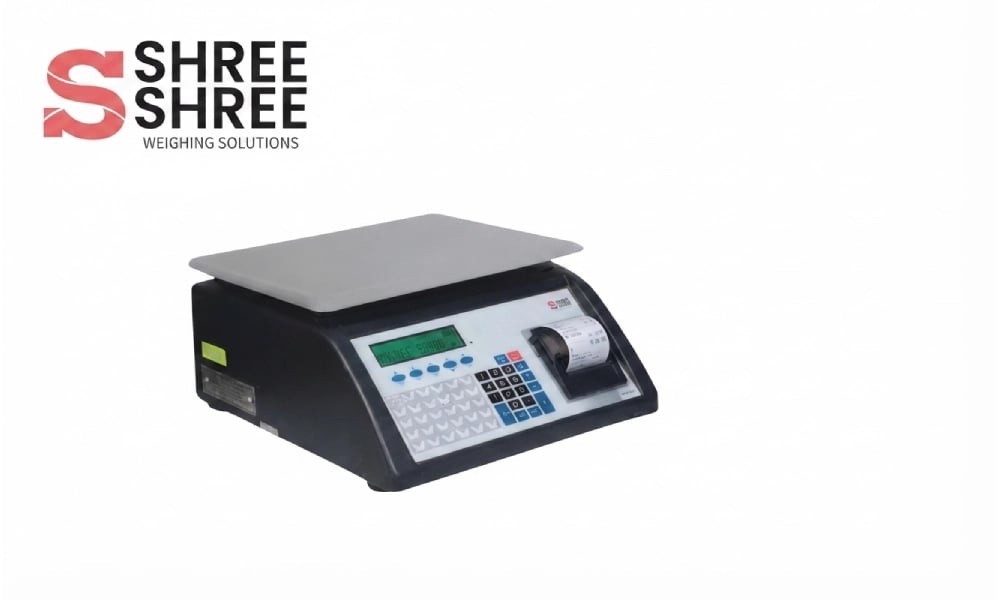
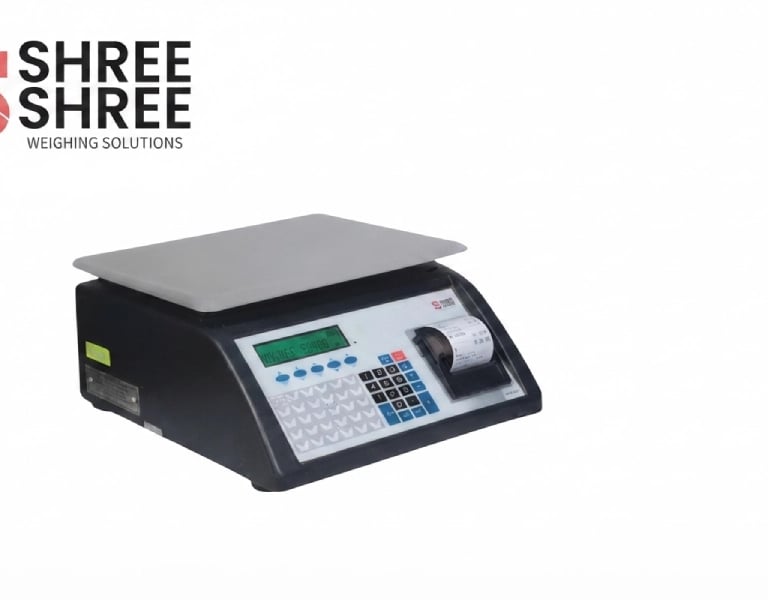
This article explains why that combination matters, what it delivers operationally that a basic scale cannot, and what retail businesses of different sizes should consider when deciding whether to invest in one.
The Problem with Selling Loose Goods Without Printed Labels
Selling items by weight without a printed label forces every transaction through a manual calculation. A staff member weighs the item, reads the display, multiplies by the price per kilogram, tells the customer the total, and either writes it on the product or hopes the checkout operator enters the same item at the same price. Each of those steps is a point where errors enter.
In a busy supermarket deli, bakery, or produce section, that process multiplied across hundreds of transactions per day creates a compounding problem: pricing inconsistencies, checkout delays when the operator cannot identify a product, and disputes when a customer questions a price that was never printed anywhere they could verify.
Separate those steps by even a few seconds and the queue builds. Anyone who has managed a fresh food counter during a Saturday lunch rush knows that speed at the point of weighing is not a comfort feature it directly determines how many customers you can serve per hour.
What a Weighing Scale with Thermal Printer Actually Does
The integration of weighing and printing in a single unit means that when goods are placed on the platform and the correct product is selected, the scale calculates the price, formats the label, and prints it typically in under two seconds. The label goes onto the product, which then moves straight to checkout where it scans like any other barcode item.
Speed at the Counter
Thermal printing technology produces labels without ink cartridges or ribbons. Heat activates the coating on the label paper, which means there is no consumable to replace mid-service, no smudging from fresh ink, and no warm-up time between labels. A well-configured scale and printer combination can produce consistent, scan-ready labels continuously throughout a trading day without interruption.
For a deli counter weighing sliced meat, a fishmonger section handling variable-weight portions, or a bakery selling goods by the hundred grams, the throughput difference between manual and printed-label workflows is measurable in customer transactions per hour.
Label Content and Compliance
The label produced by a retail weighing scale with thermal printer is not simply a price sticker. Depending on the regulatory environment, it may need to include the product name, net weight, price per kilogram, total price, use-by or best-before date, allergen information, and a barcode linking the item to the store's point-of-sale system. Pre-programming all of that into the scale's product library means the operator selects a product and the compliant label prints automatically no handwriting, no missing fields, no inconsistency between operators on different shifts.
In the UK and across the EU, regulations on prepacked-for-direct-sale (PPDS) foods require allergen information to be present on the label. Getting that right manually, under service pressure, is unreliable. Having it embedded in the label template removes the risk entirely.
How It Integrates with the Point-of-Sale System
A standalone weighing and printing setup solves the labelling problem. A scale connected to the store's POS system solves a wider set of operational problems simultaneously.
When the scale is networked typically via Ethernet or Wi-Fi to a central server product updates, price changes, and new PLU (Price Look-Up) codes push from the back office to every scale on the floor without a staff member touching each unit individually. A price change on smoked salmon takes effect at the counter the moment it is entered in the system, not whenever someone remembers to update the scale manually.
Sales data flows back in the other direction. Weight-based transactions recorded through a networked thermal printer scale give the stock management system accurate sales volumes in grams or kilograms, which improves reordering accuracy for fresh goods with tight shelf lives. Knowing that 4.3 kg of loose olives moved on a Tuesday afternoon tells the buying team something that a simple unit count never could.
For supermarkets running multiple departments produce, deli, butchery, bakery centralised PLU management across all scales is not a luxury. It is the difference between consistent pricing and errors that go unnoticed until the monthly margin review.
Why Customer Trust Depends on It
A printed label does something that a verbal price or a handwritten tag cannot: it gives the customer something to verify. The weight is on the label. The price per kilogram is on the label. The total is on the label. If any of those figures look wrong, the customer can raise it before paying rather than after, which is a much easier conversation for everyone.
In markets and independent retailers where trust is built through repeat custom, that transparency matters. A customer who regularly sees clear, consistent labels on the goods they buy from you is a customer who has one less reason to shop elsewhere. A customer who cannot read a handwritten tag, questions whether the weight was correct, or finds that the checkout price differs from what they were told at the counter is already mentally comparing you to the supermarket up the road.
The physical quality of the label also carries an impression. A clean thermal label with legible text, a scannable barcode, and accurate information reads as professional. A torn piece of paper with a handwritten price in marker pen reads as improvised, regardless of how good the product underneath it is.
Choosing the Right Setup for Your Retail Operation
Not every retail environment has the same requirements, and the specifications of a weighing scale with thermal printer should match the context it will work in.
Counter Scales for Deli and Fresh Food
Counter scales sit at the service point where staff weigh and wrap goods in front of customers. These models typically have a customer-facing display alongside the operator display, which lets the buyer see the weight and price as it registers an important transparency feature for over-the-counter service. Label width and print speed matter here; a 60mm wide label prints and applies faster than a 40mm one, and in a busy service environment those seconds accumulate.
Self-Service Produce Scales
Some supermarkets and greengrocers fit self-service scales in the produce aisle, allowing customers to weigh and label their own loose fruit and vegetables before reaching the checkout. These units need an intuitive product selection interface often a touchscreen with product images and durable construction that handles unsupervised public use throughout the day. Vandal-resistant screens and simplified label outputs are typical specifications for this application.
High-Volume Label Production
For operations that pre-weigh and pre-label goods in a preparation area a supermarket portioning its own meat cuts each morning, for example higher-speed thermal printer scales that produce labels at rates of 100 or more per minute are available. These connect to batch processing systems and often feed into automated labelling applicators rather than requiring manual application.
The Running Costs Are Lower Than Most Expect
One of the quiet advantages of thermal printing in a retail environment is the ongoing cost structure. Thermal label rolls are inexpensive compared to inkjet or laser consumables, there are no cartridges to replace, and the print mechanism has fewer moving parts than an ink-based printer meaning less maintenance and a longer service life under continuous use.
The main consumable cost is the label stock, which varies by label size, paper grade, and whether you need a food-safe adhesive for direct application to fresh goods. Buying label rolls in quantity from a scale-compatible supplier keeps this cost predictable.
Energy consumption on modern counter scales is modest. A well-specified unit draws less power than the refrigerated display case it sits in front of, and the thermal print process uses heat only at the moment of printing rather than maintaining a warm-up state between labels.
Making the Decision for Your Store
If your shop sells any goods by weight whether that is cheese, meat, fish, bakery items, loose confectionery, or produce the operational case for a weighing scale with thermal printer is clear. The speed benefit alone justifies it for most fresh food counters. The compliance benefit is increasingly non-negotiable for PPDS-labelled goods. The integration benefit scales with the size of the operation.
The practical next step is to map your current weighing and labelling workflow how many products, how many service points, whether you need POS connectivity, and what label content your category requires and use that as the specification brief when talking to a supplier. A scale chosen to fit the actual workflow will deliver far better results than one chosen on price alone.