Table Top Weighing Scale Buying Guide for Business
Walk into any busy bakery, packaging warehouse, or shipping department, and you'll spot one piece of equipment that keeps operations moving: the table top weighing scale. These compact workhorses handle everything from ingredient portioning to outgoing shipment verification, and picking the wrong one creates problems that ripple through your entire operation.
6/15/20264 min read
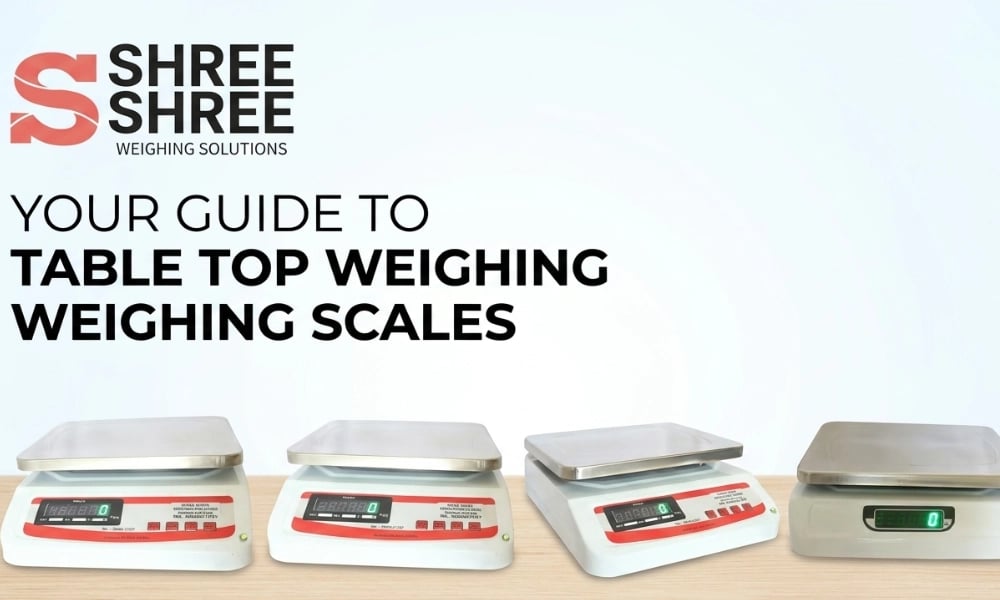
I've spent years helping business owners select weighing equipment, and the patterns are always the same. Someone sees a low price, orders in a hurry, and then deals with accuracy drift within months, or worse, discovers the scale doesn't meet their industry's compliance requirements. This guide gives you the exact checklist you need before you purchase.
You'll learn which specifications actually matter for your application, what certifications might be required by your industry, and how to evaluate build quality without becoming a calibration expert. Each point connects directly to real-world performance so you can buy with confidence.
Accuracy Specifications That Match Your Process
Understanding Readability and Division Value
The readability of your scale determines what smallest increment it can display, and matching this to your actual needs prevents overspending on precision you won't use. A recipe ingredients scale showing increments of one gram works perfectly for a bakery, but a parts counter handling heavier components doesn't need that level of sensitivity.
Readability gets expressed as the division value the smallest increment the display shows. A scale labelled 3000g x 1g reads in one-gram increments up to its capacity. That's sufficient for food portioning but might fail quality control checks if your industry requires tighter tolerance. Know your specific tolerance requirements before comparing options.
The accuracy class matters too, and this isn't negotiable in regulated industries. Commercial scales used for trade meaning anything involving sales by weight must meet specific accuracy classes defined by weights and measures regulations. Your table top weighing scale supplier can verify whether a specific model meets your state's or country's class requirements, but only if you mention your application.
Capacity vs. Practical Use
Choosing capacity sounds straightforward, but running a scale near its maximum rating constantly creates accuracy problems. A scale rated for 30 kilograms works, but if your typical loads hover at 28 kilograms, the repeated stress affects calibration over time. Leave headroom.
The best approach adds roughly 20% to your heaviest typical load. If you normally weigh bags between 10 and 12 kilograms, a 15-kilogram capacity handles comfortably while leaving space for occasional oversize items. This simple calculation prevents pushing equipment to its limits during busy periods.
Display and Interface Considerations
Readability in Your Environment
Your workplace lighting might make display readability obvious until you struggle to see readings during a rush. bright warehouse lighting, outdoor receiving areas, and facility corners all create situations where displays become difficult to read. The solution isn't guessing it's matching display technology to your environment.
LCD displays work in most indoor conditions but fade under direct sunlight. LED displays offer better daytime visibility but consume more power. Backlit displays solve low-light situations but add to the unit cost. Consider when and where your staff uses the scale most, not just the typical environment.
Display angle affects usability too. Scales with angled displays reduce neck strain when operators check weights repeatedly. For stations running continuous weighing, a tilted display prevents posture problems that accumulate over shifts. This detail sounds minor until you watch your team use the equipment for hours.
Build Quality That Survives Daily Use
Platform Construction
The platform takes the abuse in daily operations it's where containers get placed, dragged, and occasionally dropped. Stainless steel platforms clean easily and resist corrosion from spills, making them the standard for food processing and chemical handling. But stainless steel grades vary, and cheaper grades stain and corrode faster than expected.
Look for 304 stainless steel for food applications. This grade handles common cleaning agents and resists the moisture that destroys lower grades. Lower grades like 201 stainless might save money initially but develop surface pitting that traps contamination and creates cleaning problems.
Platform thickness affects durability more than people realize. Thin platforms flex under heavy loads, and repeated flexing throws off calibration. A platform that feels sturdy when you press it by hand performs better over years than one that noticeably gives. If possible, press test potential purchases rather than relying solely on specifications.
Power and Connectivity Options
Power Source Requirements
Battery power offers flexibility for receiving docks and shipping stations without nearby outlets, but battery type and life span affect ongoing costs. Rechargeable lithium batteries cost more upfront but save money over time compared to disposable batteries that require constant replacement.
Corded power makes sense for fixed stations with consistent power availability. Direct-wired scales eliminate battery concerns and work continuously without interruption. The trade-off is placement corded scales require planning for outlet locations and cable management.
Some operations need both. A scale with batteries as backup continues functioning during power outages, ensuring weighing never stops at critical moments. This redundancy costs more but prevents the production delays that power interruptions cause.
Compliance and Certification Requirements
Industry-Specific Certifications
Your industry might require specific certifications, and discovering scale limitations after purchase creates expensive problems. Food service operations face health department requirements, pharmaceutical operations follow Good Manufacturing Practice rules, and precious metals dealing operates under different gemstone and jewelry regulations.
NTEP certification matters in the United States for commercial trade. A NTEP-certified scale meets legal requirements for buying and selling by weight, and using a non-certified scale in commercial transactions creates legal exposure. Canadian measurements require S&C certification. Your local requirements might differ from federal standards, so verify before purchasing.
Medical and laboratory applications involve entirely different regulation sets. These scales might require ISO calibration documentation, specific accuracy certifications, or documented calibration procedures. The same principle applies across industries: don't assume verify requirements upfront.
Calibration Documentation
Traceable calibration documentation matters for quality systems and customer audits. The documentation you need depends on your quality system and customer requirements. Some buyers need full calibration certificates with every scale; others are fine with self-certification.
Calibration intervals vary by application. A scale in a stable environment with infrequent use needs less frequent recalibration than one exposed to temperature swings and constant weighing. Specify your recalibration interval expectation when purchasing, as this sometimes factors into the quoted service plans.
A table top weighing scale purchase doesn't need to become complicated, but skipping the checks above creates problems that cost more than the price difference between proper and impulsive buying. Matching accuracy to your process requirements, verifying compliance for your industry, and selecting appropriate build quality for your usage intensity covers the vast majority of buying decisions.
Your next step is straightforward. List your three heaviest typical loads, note your industry's compliance requirements, and count the stations where you'll use the scale. With these details in hand, reaching out to your table top weighing scale supplier becomes a conversation about matching equipment to your specifics rather than hoping something works.