
Pocket Scale vs Tabletop Jewellery Scale Which One Do You Actually Need?
A jeweller once told a buyer that the wrong scale cost him more in disputed weights over six months than the price of two good ones combined. That's the real cost of guessing on this decision not the upfront price tag, but the slow bleed of customer arguments, recalibration headaches, and staff who don't trust the numbers on the display.
6/20/20266 min read
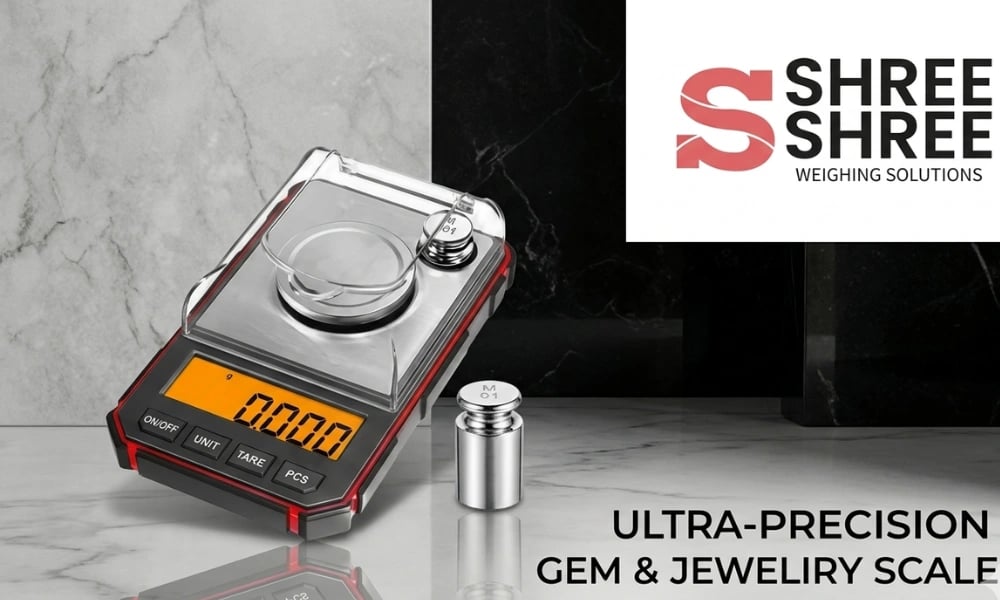
Buying weighing equipment for a jewellery counter or workshop isn't about finding "the best scale." It's about matching the tool to where and how it gets used every single day. A pocket scale and a tabletop jewellery scale solve different problems, and treating them as interchangeable is where most buyers go wrong.
This post breaks down what separates a pocket jewellery scale from a tabletop jewellery scale, where each one earns its place in a business, and which factors should actually drive the buying decision not specs sheets, but real shop-floor use.
What Sets a Pocket Scale Apart
Compact size is the obvious feature, but the real value of a pocket scale lies in its mobility and speed. Slip one into a drawer, a sample case, or a coat pocket, and it's ready for use within seconds of arriving at a client's home or a buying trip.
Most units in this category run on small batteries, fold shut to protect the weighing pan, and weigh items from a fraction of a gram up to a few hundred grams. That range covers loose stones, small gold pieces, and individual chains comfortably.
Field buyers the people who travel to estate sales, scrap gold purchases, or vendor meetups rely on a pocket scale because nothing else fits the job. Carrying a tabletop unit to a doorstep negotiation simply isn't practical.
Where Precision Bends a Little
Accuracy on a pocket scale typically sits in the 0.01g to 0.1g range depending on the model, which is fine for spot-checking purity-adjusted weights or quoting an approximate buy price. It's not the instrument for splitting hairs on a high-value diamond parcel.
Buyers who push a pocket scale into tasks meant for lab-grade precision usually end up second-guessing their own numbers. The scale isn't faulty it's simply being asked to do something outside its design intent.
Stability also plays a role here. A small pan sitting on an uneven countertop or a slightly shaky table introduces tiny errors that add up over dozens of weighings, something the unit's compact footprint makes harder to fully avoid.
The Cost Advantage
Price is where a pocket jewellery scale wins outright. Entry-level models sell for a fraction of what a calibrated tabletop unit costs, making them an easy first purchase for a new business or a backup unit for a second counter.
That affordability also makes replacement painless. Drop one, damage the sensor, and swapping it out doesn't dent the monthly budget the way replacing a tabletop scale would.
What a Tabletop Jewellery Scale Brings to a Fixed Counter
A tabletop jewellery scale is built for permanence. It sits on a counter, plugs into a stable power source or runs on a long-life battery, and stays calibrated for extended stretches without drifting.
Readability is the first thing buyers notice larger displays, often backlit, designed to be read clearly by both the staff member and the customer standing across the counter. That visibility matters more than it sounds; disputes over weight often start because a customer couldn't see the number clearly in the first place.
Built for Repetition and Volume
Counters that process dozens of transactions a day need a scale that holds its calibration through that volume without needing constant resets. Tabletop units are engineered for exactly that kind of repeated, all-day use.
That durability comes from sturdier load cells and a heavier base, both of which keep the reading steady even when a busy staff member is weighing one piece after another without pause between customers.
Many models include a draft shield a small glass enclosure around the pan to block air currents from skewing readings, something a pocket scale rarely bothers to include given its size constraints.
Precision That Holds Up to Scrutiny
A tabletop jewellery scale commonly measures down to 0.001g, sometimes finer, depending on the model and price tier. That level of resolution matters when pricing is based on exact carat weight or when a customer asks to watch the weighing happen.
Legal-for-trade certification is also more common in this category. Businesses that need a scale recognized for official transactions, audits, or compliance checks should look specifically for that certification rather than assuming any tabletop model qualifies.
Built for Repetition and Volume
A tabletop jewellery scale commonly measures down to 0.001g, sometimes finer, depending on the model and price tier. That level of resolution matters when pricing is based on exact carat weight or when a customer asks to watch the weighing happen.
Legal-for-trade certification is also more common in this category. Businesses that need a scale recognized for official transactions, audits, or compliance checks should look specifically for that certification rather than assuming any tabletop model qualifies.
Matching the Scale to the Job, Not the Other Way Around
The mistake many buyers make is choosing based on which scale feels more "professional" rather than which one fits the actual workflow. A scale that looks impressive on a counter but sits unused because the real work happens on the road isn't solving anything.
Start by mapping out where weighing actually happens during a typical week. A shop owner who never leaves the counter has a different need than a buyer who spends three days a week visiting clients and two days behind the register.
Questions Worth Answering Before Buying
Transaction volume matters first a counter handling fifty weighings a day needs different durability than one handling five. Mobility needs come second; if the scale travels, weight and battery life matter more than display size.
Precision requirements depend heavily on what's being weighed. Gold bullion and finished jewellery pieces tolerate different margins of error than loose diamonds or small coloured stones, where even a hundredth of a gram can shift a price quote.
Common Scenarios and What They Call For
A retail jeweller running a single fixed location, dealing mostly with finished pieces and walk-in customers, gets more daily value from a tabletop jewellery scale. The display visibility alone reduces friction at the point of sale.
A gold buyer who travels between towns for scrap purchases needs a pocket scale as the primary tool, full stop. Nothing about that workflow benefits from a unit that can't leave the shop.
The Hybrid Case
Many established jewellery businesses end up owning both, and that's not redundant spending it's recognizing that a single business often runs two different workflows simultaneously. The counter gets the tabletop unit; the field team or the owner's travel bag gets the pocket scale.
Smaller operations on a tighter budget sometimes start with just a pocket jewellery scale and add a tabletop unit once foot traffic and counter transactions justify the investment. That sequencing makes financial sense for a business still building its customer base.
A workshop that does repair and custom-order work alongside retail sales often finds the pocket scale useful for quick checks during the crafting process, while the tabletop unit handles the final, customer-facing weight that goes on the receipt.
Maintenance, Calibration, and Long-Term Reliability
Calibration weights should travel with whichever scale a business relies on most. Pocket scales, given their portability, tend to need recalibration more frequently simply because they get bumped, dropped, or exposed to temperature swings during transport.
Tabletop scales, staying in one climate-controlled environment, generally hold calibration longer between checks. Still, neither type should go more than a few weeks without verification if accuracy affects pricing decisions.
Humidity and temperature swings near a shop entrance or a window can quietly affect either scale over time, so positioning the tabletop unit away from drafts and direct sun does more for long-term accuracy than most owners realize.
Battery type deserves attention too. A pocket scale dying mid-transaction during a client visit creates an awkward moment that a tabletop scale, often running on mains power, simply avoids.
Making the Final Call
Set aside the idea of finding one universally "better" scale. A pocket scale earns its keep through portability and low cost, serving buyers and field agents who need fast, approximate readings away from a counter. A tabletop jewellery scale earns its keep through stability, finer precision, and the kind of display clarity that builds customer trust at the point of sale.
Walk through an actual week of business operations before deciding. Count the weighings, note where they happen, and check what precision the products being weighed actually demand. That exercise will point toward the right purchase far more reliably than comparing spec sheets in isolation.
A business that outgrows its current scale isn't a failure of planning it's a sign the operation is scaling up. When that day comes, adding the second type of scale to the toolkit, rather than replacing what already works, tends to be the smarter move.