
Platform Scale vs Table Top Scale Which One Does Your Business Need?
Weighing equipment looks simple from the outside you put something on it, a number appears, and you move on. But anyone who has bought the wrong type of scale for their business knows how quickly that simplicity breaks down. A scale that is too small for the loads it is asked to weigh degrades faster than it should. One that is over-specified for light retail work costs more than necessary and takes up counter space that should be doing something else.
6/15/20266 min read
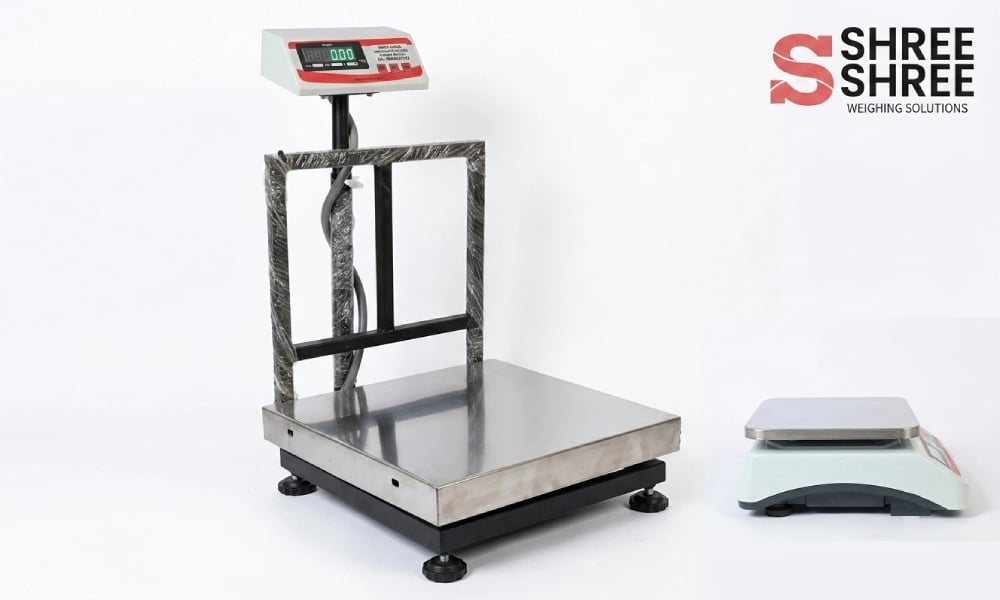
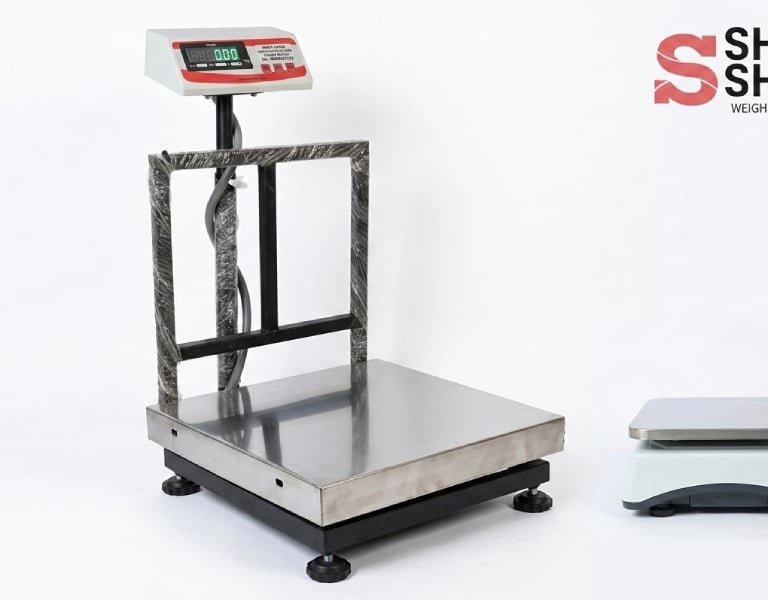
The choice between a platform scale and a table top scale is one of the most common decisions buyers face and it is also one of the most frequently made incorrectly, simply because the two categories overlap in ways that make the boundary between them seem unclear. This guide draws that boundary clearly, explains the real-world differences in how each type performs, and helps you match the right scale to what your business actually needs.
What a Platform Scale Is Built to Do
A platform scale is a floor-standing weighing instrument with a flat, open weighing surface the platform positioned at or near ground level. The design is intentional: loads are placed on the platform directly, often using a forklift, pallet truck, or by simply rolling or sliding goods onto the surface. The platform itself is large enough to accommodate bulky items, bags, drums, crates, or pallets that would never fit on a countertop instrument.
Capacity on a platform scale starts where bench-top instruments typically end. Entry-level platform scales begin at 150 to 300 kilograms and run through to several tonnes for heavy industrial models. The load cells supporting the platform are positioned at each corner, with their combined output summed through a junction box to produce a single reading on the indicator unit.
What makes a platform scale practical for industrial and logistics environments is not just its capacity it is its structural design. The low-profile platform allows easy loading without lifting. The indicator is typically mounted on an adjustable column at a height that an operator can read comfortably while loading. The frame is built from structural steel to withstand the kind of repeated mechanical stress that a warehouse or dispatch environment generates day after day.
For operations moving goods by weight dispatching orders, receiving deliveries, checking incoming raw material, or verifying outgoing shipment weights a platform scale is built for the pace and volume of that work.
What a Table Top Scale Is Built to Do
A table top scale is a compact bench-mounted weighing instrument designed for use on a counter, workbench, or desk. Its working range typically runs from a few grams up to 30 or 50 kilograms, though some models extend to 150 kilograms for heavier bench applications. The platform surface is small enough to sit comfortably within an arm's reach and the instrument is light enough to be repositioned easily.
The design priorities of a table top scale are precision, readability, and convenience for frequent, repetitive use at close quarters. Retail scales for selling goods by weight, portion scales in bakeries and food preparation kitchens, counting scales in manufacturing and packaging, jewellery scales, pharmaceutical dispensing scales, and laboratory reference balances are all table top instruments, even though their specifications vary enormously.
The indicator, display, and controls are integrated directly into the unit rather than being mounted on a separate column. This makes the table top scale self-contained and easy to operate without additional installation. For a retail assistant serving customers at a counter, or a pharmacist dispensing measured quantities, the convenience of having the display immediately visible and the controls within reach is a genuine daily advantage.
The trade-off for that compactness is capacity. A table top scale is not designed for loads exceeding its rated maximum, and attempting to weigh oversized or overweight items on a bench-top instrument risks permanent damage to the load cell the component that generates the weight reading and produces inaccurate results even before damage occurs.
Where the Two Types Serve Different Purposes
Volume and Load Size
The most straightforward separator between these two scale types is what you are weighing and how much of it. A table top scale handles anything that fits comfortably on a small platform and falls within its rated capacity packaged food items, small components, jewellery, parcels up to a moderate weight. A platform scale handles anything that is too heavy, too bulky, or arrives in formats pallets, sacks, drums that simply cannot be placed on a bench-top surface.
If your operation involves receiving palletised deliveries, weighing livestock feed sacks, checking drum weights in a chemical plant, or verifying the loaded weight of dispatch crates, a platform scale is not optional. The physical size and capacity of the load demands it.
Working Environment
The environment the scale operates in affects which type is appropriate beyond just the load requirement. Platform scales for industrial environments are built to IP standards that protect against dust, moisture, and mechanical stress. Stainless steel platform scales are standard in food processing and meat handling environments where daily wash down with water or cleaning chemicals is routine.
A table top scale for a dry indoor retail or office environment does not need the same level of environmental protection and the lighter construction is appropriate. A table top scale placed in a wet food production environment, however, needs the same IP protection considerations that apply to its larger counterpart and not all bench-top instruments are built to that standard.
Accuracy Requirements
This is where the comparison becomes less about size and more about application. Platform scales are typically accurate to 50 grams or 100 grams at lower capacity points, with less precision at higher capacities. For weighing a 200 kilogram delivery of materials, an accuracy of 100 grams is more than adequate.
A table top scale used for portioning food, dispensing pharmaceutical ingredients, or counting small components needs to be accurate to 1 gram, 0.1 gram, or even finer depending on the application. The precision requirements of retail portioning, laboratory work, or jewellery weighing are incompatible with the resolution a platform scale provides.
The decision is not simply about which scale weighs more. It is about which scale provides the level of accuracy your specific task demands.
Industries That Use Each Type
Platform Scale Applications
Warehousing and logistics operations use platform scales at dispatch and receiving points to verify shipment weights, catch short deliveries, and ensure outgoing orders match documented weights. Agricultural businesses use them to weigh grain sacks, produce crates, and livestock feed. Manufacturing plants use platform scales at goods-in checkpoints to verify raw material deliveries against purchase orders.
Waste management facilities use platform scales to weigh collected materials before processing. Chemical and petrochemical plants weigh drums and intermediate bulk containers. Courier and freight companies use platform scales to determine shipping weights for billing.
In all of these applications, the combination of physical capacity, structural durability, and ease of loading large items is what makes the platform scale the correct instrument. Speed matters in these environments an operator loading and weighing multiple items per hour needs a scale that accommodates that workflow without constant careful placement.
Table Top Scale Applications
Retail food shops butchers, fishmongers, and delicatessens use table top scales at the counter to weigh products for sale by weight. A price computing scale calculates the total cost automatically based on the weight and price per kilogram, which significantly reduces the arithmetic burden on the counter assistant and speeds up transactions.
Bakeries and food production kitchens use bench-top portion scales to control recipe ingredient weights and ensure consistency across batches. A baker relying on approximations will produce inconsistent results; one using a calibrated bench scale produces the same loaf every time.
Manufacturing and packaging operations use table top counting scales to verify component counts placing a reference quantity on the scale, setting the piece weight, and then counting larger quantities by weight rather than individual counting. For small components like screws, springs, or electronic parts, this approach is dramatically faster than manual counting and more reliable.
Legal Metrology and Trade Use
Any scale used in India to determine the price paid by a customer selling goods by weight at a retail counter, for example must be verified and stamped under the Legal Metrology Act. This requirement applies to both platform scales and table top scales used in trade. A scale that has not been through legal metrology verification is not legally compliant for commercial use, regardless of how accurate it is in practice.
When purchasing either type of scale for trade use, confirm with the supplier whether the instrument is available in a legal metrology approved version, how the verification process works post-purchase, and whether the scale carries the appropriate certification. Operating a non-verified trade scale carries penalties under Indian law that no cost saving justifies.
For internal process use weighing raw materials, checking production batches, verifying stock legal metrology verification is not required, and the choice of scale is governed purely by technical and operational requirements.
The platform scale versus table top scale decision comes down to three things: what you are weighing, how accurately you need to weigh it, and in what environment that weighing happens. Neither type is universally better each serves a purpose that the other genuinely cannot.
A business with both a warehouse receiving function and a retail counter may well need both a platform scale at the goods-in bay and a table top scale at the point of sale. Many operations run both types simultaneously because the two use cases are simply different problems.
Before making a purchase, map out your actual workflow the items you weigh, the frequency, the environment, and whether the weight is used for trade or internal purposes. The right scale becomes obvious once those questions have clear answers. The wrong scale bought on price alone will cost more than the difference within the first year of use.