
The Ultimate Buyer's Guide to Luggage Weighing Scales in 2026
There is something uniquely frustrating about standing at an airline check-in counter, watching the agent shake her head as your bag tips past the weight limit and then having to either pay a surprise fee or crouch on the floor, rearranging socks and shampoo bottles in front of a queue of strangers. Luggage weighing scales exist precisely to save you from that moment. They are inexpensive, compact, and among the most quietly useful travel accessories you can own. This guide walks you through every meaningful decision in choosing one from sensor accuracy and display type to the features that look good in a product listing but rarely matter in real life.
6/25/20265 min read
Why the Cheap Option Often Costs More
Walk into any discount store and you will find a handheld luggage scale for under four dollars. It will probably work once or twice and then the spring mechanism will drift enough to give you readings that are consistently two to three kilograms off. You pack under the limit at home, arrive at the airport confident, and still get charged an excess fee.
The real cost of a bad scale is not the four dollars you spent on it. It is the £50 overweight baggage surcharge on a budget carrier, or the time lost at the airport. A quality handheld or digital luggage scale in the $15–$35 range will last years and pay for itself on a single trip where it saves you from a fee.
Build quality matters more than brand name. Look for scales with an ABS plastic body (resists cracking when tossed into a bag), a reinforced strap hook, and a stated accuracy of ±100 grams or better.
The Main Types of Luggage Weighing Scales
Handheld Digital Scales
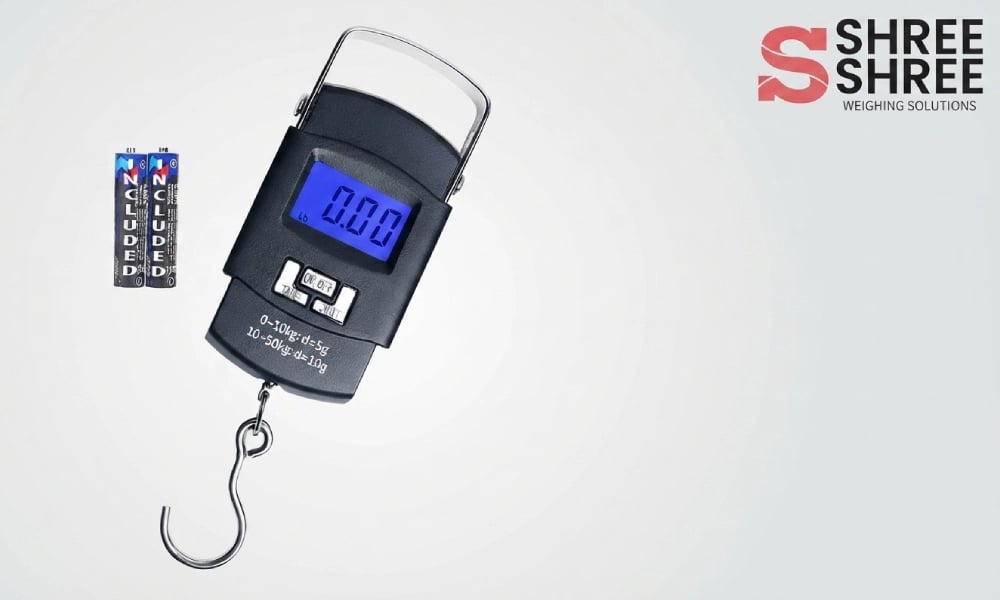
These are the category most travellers default to, and for good reason. You attach the hook to your bag's handle, lift, hold the scale level for two to three seconds, and the reading locks on the display. Modern digital models with load cell sensors are accurate, repeatable, and built to last.
The display matters more than you might think. Backlit LCD screens mean you can weigh your bag in a dim hotel room at 5am without squinting. Some models use larger digit displays specifically for quick reading at arm's length a small detail that makes the experience noticeably easier.
Weight range is another spec worth checking. Most handheld scales top out at 50 kg (110 lbs), which covers the vast majority of airline allowances. If you regularly ship boxes or weigh cargo rather than personal luggage, look for models rated to 70 kg.
Flat Platform Scales
These work like a bathroom scale you place the bag on the platform and read the weight directly. They are accurate and easy to use, but they are also bulky. For home use before packing, a flat platform scale is excellent. As something to bring with you on a trip, they are impractical.
Some travellers keep a flat platform scale at home for initial packing and carry a compact handheld model in their bag for en-route weighing. That combination covers both use cases without compromise.
Spring-Based vs Load Cell
Spring-based scales use mechanical tension to measure weight. They are cheap to manufacture, require no batteries, and lose accuracy over time as the spring fatigues. Load cell scales use electronic strain gauges the same technology in industrial weighing equipment and maintain consistent accuracy across thousands of uses. Unless you are specifically looking for a battery-free option for ultralight packing, a load cell digital scale is the right choice every time.
Features That Actually Matter
Tare Function: This lets you zero out the weight of a strap, carabiner, or carrying aid so you measure only the bag itself. Not every scale includes this, but it is worth prioritising if you use any kind of attachment mechanism.
Auto-lock Display: The reading holds on screen for 5–10 seconds after you set the bag down. This sounds trivial until you are travelling alone and trying to weigh a bag without a second person to read the screen.
Unit Toggle: Switching between kilograms and pounds should take one button press. Most carriers state allowances in kilograms; US-based airlines typically use pounds. A scale that handles both without needing conversion in your head is genuinely useful.
Low Battery Indicator: A scale that gives inaccurate readings because the battery is dying without warning is worse than no scale at all. The indicator tells you when to swap out the AAA cells before your next trip.
Weighing Range and Overload Alert: An overload alert protects the sensor when you accidentally try to weigh something beyond the scale's rated capacity. This extends the product's lifespan considerably.
What to Look for Based on How You Travel
How you use your luggage weighing scale should shape which model you choose.
Frequent flyers on international routes carry the most risk of fees because airline policies vary dramatically by carrier and route. A scale with ±50-gram precision is worth the small price premium. Some international routes have 20 kg limits while others allow 30 kg, and getting close to those limits accurately saves money repeatedly.
Weekend or budget travellers usually only need to confirm they are under a 10 kg cabin bag limit or a basic 20 kg check-in allowance. A straightforward digital handheld model with good build quality and a clear display is all that is needed. Spending more than $25 is likely overkill for occasional use.
Families packing multiple bags benefit from a scale that has fast response time if you are weighing four bags in a row before a 6am departure, a scale that takes eight seconds to lock a reading gets tedious quickly. Look for response times under three seconds on the product specification.
Travellers who also ship parcels should consider whether a single high-capacity model can serve both purposes. A 70 kg rated scale handles most personal luggage and medium-weight parcels without needing two separate devices.
Accuracy Standards and What Airlines Actually Check With
This is the part most buyer's guides skip entirely. Airlines use Class III certified weighing instruments regulated, calibrated, and audited. Your personal luggage weighing scale does not need to match that standard, but knowing the gap helps you pack with a sensible margin.
Consumer scales are generally accurate to within ±100–200 grams when new and properly calibrated. The practical takeaway: if the airline limit is 23 kg, pack to 22.5 kg on your scale rather than 22.9 kg. That 500-gram buffer accounts for any measurement difference between your device and the check-in desk equipment.
Temperature matters too. A scale that sat in a freezing car boot overnight may give slightly different readings until it equilibrates to room temperature. Most good-quality digital scales specify an operating temperature range typically 0°C to 40°C. Avoid using any scale in very cold or very humid conditions if you need precise results.
Red Flags to Avoid When Shopping
No stated accuracy tolerance on the product page is a warning sign. Reputable manufacturers publish their accuracy specifications because they are confident in them. A listing that only says "highly accurate" without numbers is not giving you information it is avoiding giving you information.
Vague weight capacity claims like "suitable for all luggage" should be verified against an actual kilogram or pound figure. Strap attachment quality is worth scrutinising in product photos a thin metal hook soldered to a plastic body will deform under repeated heavy loads. Reviews mentioning inconsistent readings across multiple uses of the same bag are a reliable signal to move on.
A Practical Buying Checklist
Before placing an order, run through these criteria: load cell sensor (not spring-based), accuracy of ±100 g or better, capacity of at least 50 kg, auto-lock display, backlit screen, unit toggle, low battery warning, and a reinforced strap hook. A scale that ticks all eight of those boxes will serve you reliably for years.
Spending between $18 and $30 puts you in a range where build quality is consistently solid across most reputable brands. Below $10, corners are usually cut on the sensor or housing. Above $40, you are mostly paying for branding rather than meaningfully better performance.
Accuracy Standards and What Airlines Actually Check With
The cost of professional calibration is modest compared to the cost of a disputed short-weight claim or a regulatory penalty. Scheduling it annually, or after any significant knock or overload event, is simply good practice.
Making the Final Call
The best luggage weighing scale for you is the one you will actually use which means it needs to be small enough to live in your travel bag without taking up meaningful space, simple enough to use at 5am without reading the manual, and accurate enough to trust when you are packing close to the limit.
Pick a model with a load cell sensor and a backlit auto-lock display, confirm the build quality in reviews, and keep it in your luggage permanently. The scale that is always with you is more useful than the perfect scale sitting on your kitchen counter.
Next time you book a flight, weigh your bag at home first. It takes thirty seconds and potentially saves you more than the scale cost in the first trip.