How to Choose the Right Heat Sealing Machine for Your Business
A small electronics assembly unit in Pune used to count screws by hand. Two workers, every morning, dividing thousands of tiny components into bags of 500 for the production line. It took the better part of an hour, and on the days when someone miscounted, the line either ran short mid-shift or finished with a bag of leftover parts that had to be reconciled at the end of the day.
6/25/20267 min read
Walk into almost any packaging operation a food business sealing snack pouches, a pharmaceutical company sealing blister packs, a courier company sealing polythene mailers, or a textile exporter sealing garments into protective bags and somewhere in that workflow sits a heat sealing machine doing a job that looks simple but rarely is.
The job looks simple because the end result is simple: two layers of film, pressed together with heat and pressure, bonded into a seal that holds. What is not simple is choosing the machine that does this reliably, at the speed your operation needs, on the specific material you use, for the volume you produce without becoming the bottleneck in your production line or the reason a batch of product gets recalled because a seal failed.
This guide walks through what actually matters when choosing a heat sealing machine, covering the different types available, the specifications that genuinely affect performance, and the questions worth asking any heat sealing machine supplier before money changes hands.
Understanding the Different Types of Heat Sealing Machines
The first decision point is not which brand or model to buy it is which category of machine actually fits how your product moves through your facility. Heat sealing machines come in several distinct formats, and choosing the wrong format means fighting your equipment every single day.
Hand-Held and Tabletop Sealers
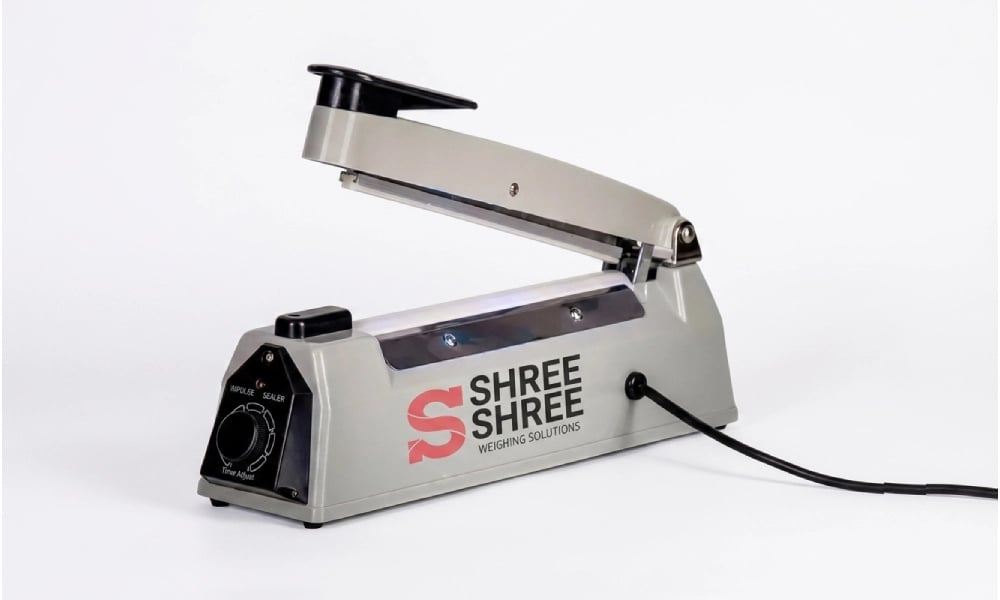
Hand-held sealers and small tabletop units are the entry point for low-volume operations. A hand-held sealer clamps onto the open end of a bag, applies heat for a set duration, and produces a seal operated manually, one bag at a time. Tabletop sealers work similarly but sit fixed on a bench, with a foot pedal or lever activating the seal cycle.
These machines suit businesses sealing a few dozen to a few hundred items per day small food producers, craft businesses, home-based packaging operations, or quality control sampling in larger facilities. The limitation is throughput. Beyond a certain volume, the per-bag handling time of a manual sealer becomes the constraint on how much product can move through packaging in a day.
Continuous Band Sealers
A continuous band sealer pulls the open end of a bag through a heated band using a conveyor mechanism, sealing as the bag passes through. The operator's job is to position the bag at the entry point and let the machine do the rest. This format dramatically increases throughput compared to hand-held sealing because the operator is not waiting for a seal cycle to complete before moving to the next item the conveyor keeps moving continuously.
Continuous band sealers are the standard choice for medium-volume packaging operations food production lines, e-commerce fulfilment centres packing polythene mailers, and any operation sealing dozens to hundreds of items per hour. Many models include date coding or batch printing as an integrated feature, which matters for food and pharmaceutical applications where traceability is required on every pack.
Vacuum Sealers
Vacuum sealing combines the sealing function with air evacuation removing air from the package before sealing to extend shelf life, reduce product volume, or prevent oxidation. Vacuum sealers range from small chamber units suitable for food service and retail back-of-house operations to large industrial chamber machines that process multiple packages simultaneously under a single vacuum cycle.
For food businesses dealing with products sensitive to oxidation cured meats, cheese, coffee, and similar items vacuum sealing is often not optional. The shelf life extension and product protection it provides is built into the product specification, which means the heat sealing machine becomes part of the food safety system rather than just a packaging convenience.
Impulse Sealers vs Constant Heat Sealers
This distinction cuts across the format categories above and affects how the sealing element itself works. A constant heat sealer maintains its sealing element at a fixed temperature continuously the element is always hot, and the seal forms when the material contacts it under pressure for the set dwell time. An impulse sealer heats the sealing element only during the brief moment of the seal cycle, using a pulse of electrical current, then allows it to cool before the jaws release.
Impulse sealing is generally better suited to thinner films and heat-sensitive materials because the brief heating cycle reduces the risk of scorching or distorting the film. Constant heat sealing tends to suit thicker materials and higher-speed continuous operations where the sealing element needs to be ready instantly for the next cycle without a heating delay.
Matching the Machine to Your Material
Film Thickness and Composition
The material you are sealing dictates almost everything about which heat sealing machine will actually work for your application. Thin polythene films used for retail bags behave very differently under heat than the multi-layer laminate films used in food pouches, which behave differently again from the foil laminates used in pharmaceutical blister packaging.
Multi-layer films often have a specific heat-seal layer typically a polyethylene or polypropylene layer designed to bond at a particular temperature range sandwiched between layers that serve other functions like barrier protection or printing. The sealing machine needs to reach and hold the temperature required for that specific seal layer without overheating the adjacent layers to the point of burn-through or delamination.
This is where working with an experienced heat sealing machine supplier pays off. A supplier who asks about your specific film structure before recommending a machine is doing the job properly. A supplier who quotes a machine based purely on bag size without asking what material you are sealing is setting up a mismatch that will show up as seal failures once the machine is running on your actual production line.
Seal Width and Seal Strength Requirements
Different applications require different seal widths and different seal strength characteristics. A retail bag seal that simply needs to stay closed during transport and handling has modest requirements. A food pouch that will be subjected to retort processing high temperature sterilisation after sealing needs a seal that can withstand significant thermal and pressure stress without failing. A modified atmosphere packaging application needs a hermetic seal that maintains the internal gas composition for the product's entire shelf life.
Specify the seal strength requirement for your application in measurable terms typically expressed in Newtons per 15mm or similar units and ask any prospective heat sealing machine supplier whether their equipment has been tested to achieve that seal strength on your specific film structure. This is a question that separates suppliers with genuine application knowledge from those simply selling boxes.
Throughput, Automation and Where Your Business Is Headed
Matching Speed to Actual Production Volume
It is tempting to buy the fastest machine available, on the logic that more capacity is always better. In practice, a machine running well below its rated speed for most of its working life is not delivering value for the additional cost and high-speed machines often come with higher maintenance complexity and a steeper learning curve for operators.
The better approach is to calculate your actual sealing requirement units per hour, accounting for realistic operating hours and expected growth over the next two to three years and choose a machine specification with headroom above that figure, rather than headroom above what the most ambitious growth projection might require.
Integration With Existing Packaging Lines
For businesses with an existing packaging line, the heat sealing machine needs to integrate physically and operationally with what comes before and after it. A continuous band sealer that runs faster than the filling station feeding it creates idle time on the sealer. One that runs slower becomes the bottleneck that backs up the entire line.
When evaluating machines for an integrated line, share your line speed and product flow with the supplier and ask specifically how their machine's throughput compares to your existing equipment. A heat sealing machine supplier with experience supplying into production lines rather than standalone units will understand this conversation immediately and should be able to advise on synchronisation, including conveyor speed matching and any buffer requirements between stations.
Automation Level and Operator Dependency
Manual and semi-automatic sealers depend on an operator's consistency how they position the bag, how evenly they apply pressure on a hand-held unit, how attentive they remain across an eight-hour shift. Fully automatic systems remove much of this variability by mechanising the positioning, sealing, and ejection process.
The right automation level depends on your labour situation as much as your volume. A business with a stable, trained workforce may get excellent results from semi-automatic equipment at a lower capital cost. A business with high staff turnover or variable seasonal labour may find that automation pays back faster, simply because consistent seal quality does not depend on operator training level on any given day.
What to Ask Before You Buy
Sealing Element Life and Replacement Cost
The heating element is the component that wears out fastest on any heat sealing machine, particularly on high-cycle continuous operations. Ask the supplier about the expected lifespan of the heating element under your anticipated usage pattern, the cost of replacement, and how straightforward the replacement process is whether it requires a service visit or can be done by your own maintenance staff.
After-Sales Support and Spare Parts Availability
A heat sealing machine that goes down on a production line stops packaging entirely there is rarely a manual fallback that can match the throughput of the machine it replaces. Ask any heat sealing machine supplier about their typical response time for service calls, whether they hold spare parts locally or need to order from elsewhere, and what support is available outside standard business hours if your operation runs extended shifts.
Energy Consumption and Operating Cost
Constant heat sealers consume power continuously to maintain element temperature, even during idle periods between cycles. For operations running multiple sealers across long shifts, the cumulative energy cost is worth understanding before purchase. Ask for the power rating of any machine under consideration and factor realistic duty cycles into your operating cost comparison between models.
Choosing a heat sealing machine is really a process of matching three things precisely your material, your volume, and your line configuration to a piece of equipment that can handle all three reliably, day after day, without becoming the constraint your business has to work around.
The suppliers worth working with are the ones who ask about your film structure, your seal strength requirements, and your line speed before recommending anything not the ones who quote based on bag dimensions alone. Take the time to define those three things clearly, bring that specification to the conversation, and the right machine becomes much easier to identify, regardless of how many options sit in front of you.