
How to Calibrate a Farmers Weighing Scale for Accurate Results
A single kilogram of error does not sound like much until you multiply it across a hundred bags of grain, a season's worth of livestock sales, or a daily milk collection run. For anyone working in agriculture, a farmers weighing scale that reads slightly off is not a minor inconvenience it is a quiet drain on income, a source of disputes with buyers, and in regulated markets, a compliance risk. Calibration is the fix, and it is simpler than most people assume.
6/25/20265 min read
This guide walks through why scales drift, how to calibrate the most common types used in farm settings, what tools you need, and how to know when the job is beyond a field adjustment and needs professional attention.
Why Farm Scales Lose Accuracy Over Time
No scale, however well-built, maintains perfect accuracy indefinitely. The mechanisms that measure weight whether a mechanical spring, a strain gauge, or an electronic load cell are affected by the same conditions that make farm environments demanding: temperature changes, vibration, dust, moisture, and physical impact.
A scale that sits in a barn sees temperature swings from cold mornings to midday heat. Metal components expand and contract, and over time this changes resting tension in mechanical scales or introduces subtle drift in electronic ones. Load cells are sensitive to sustained overloading regularly placing loads near or above the rated maximum causes the internal gauge to fatigue and readings start to creep.
Physical knocks accelerate the process. A platform scale dropped during transport, a hanging scale with a damaged hook point, or a bench scale used as a resting surface for tools all shift calibration faster than normal use would.
Tools You Need Before You Start
Calibrating a scale correctly requires known reference weights. Without them, you are essentially guessing. Certified calibration weights available in sets from reputable weighing suppliers come stamped with their exact mass and traceable to national measurement standards. For farm use, a set covering the working range of the scale is sufficient. A scale used for weighing 50 kg grain bags needs calibration weights in that range, not a collection of small 1 kg test pieces.
If certified weights are not available, there are practical alternatives that experienced farmers have used for decades. Factory-sealed containers of a known commodity a 25 kg bag of salt or fertiliser checked against a recently serviced scale can serve as a working reference in the field. This is not ideal for legal-for-trade calibration but is adequate for routine accuracy checks between professional services.
A flat, stable surface matters too. Running a calibration on an uneven floor or a scale with a slight lean introduces error before you start. A spirit level takes thirty seconds to check and can save a wasted calibration attempt.
Calibrating Different Types of Farmers Weighing Scales
Mechanical Hanging and Dial Scales
These are the simplest to calibrate and require no electronics knowledge. The first step is zeroing: with nothing attached or placed on the scale, confirm the indicator reads zero. Most mechanical hanging scales have an adjustable nut or knurled ring at the top of the body that shifts the zero point. Turn it until the needle rests exactly on zero before applying any weight.
Once zeroed, hang or place your reference weight and read the result. If the reading matches the known weight, the scale is within calibration. If it does not, look for a span adjustment typically a second adjustment point, sometimes inside the body casing. Not all mechanical scales have this; many are factory-set for span and can only be zeroed in the field. If the span is off by more than 1–2%, the internal spring has likely fatigued and the scale needs to be serviced or replaced.
Always check at two points in the range the low end and the high end because a spring that reads correctly at 5 kg may not read correctly at 45 kg.
Platform and Floor Scales
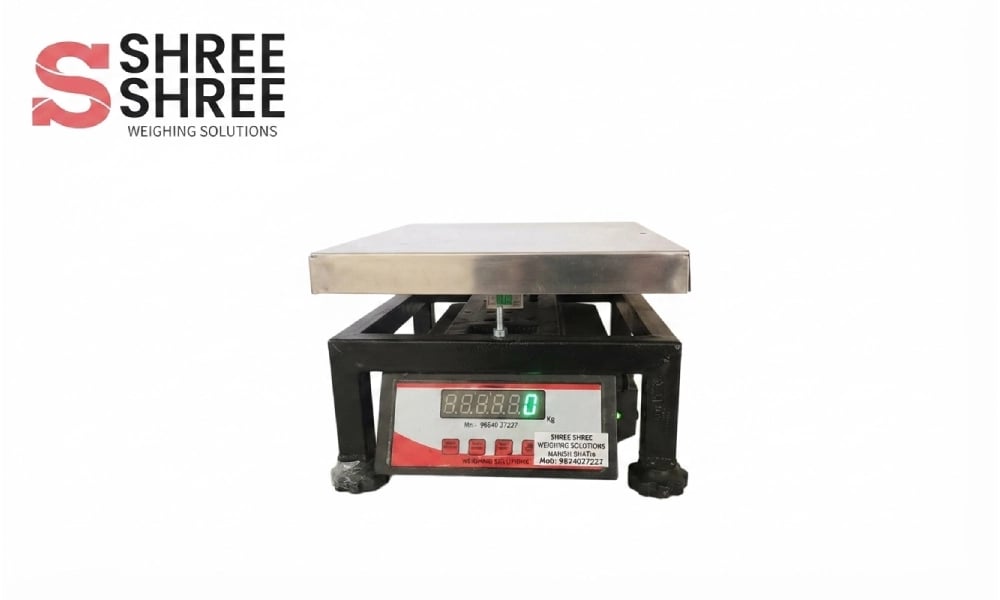
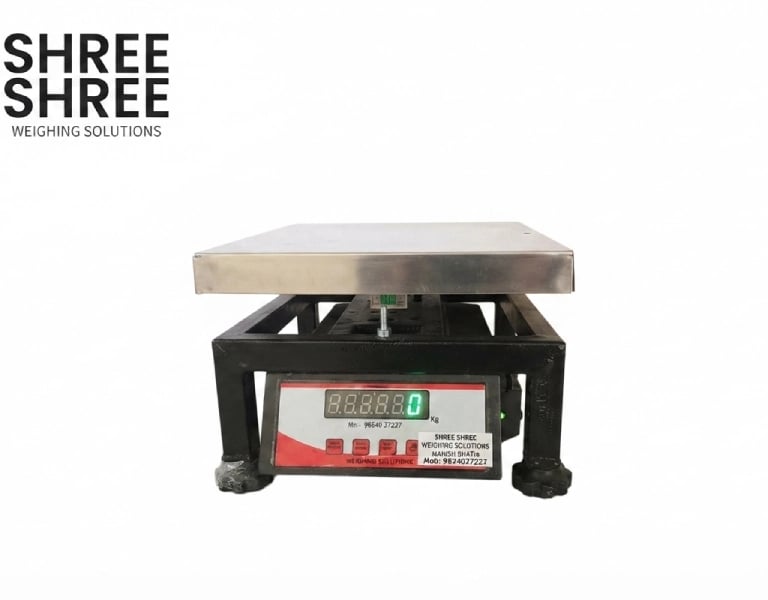
Platform scales used for weighing livestock, produce bins, or bagged goods typically use load cells and a digital indicator. Calibration on these models is done through the indicator's settings menu, and the process varies by manufacturer, so having the manual on hand is not optional it is the starting point.
The general process follows this sequence: place the empty platform on a stable, level surface, enter calibration mode on the indicator, confirm the zero reading, then apply the full-span calibration weight when prompted. The indicator stores the reference point and adjusts all future readings accordingly. Some models require a mid-span weight too, which improves linearity across the full range.
After calibration, test at three different points light, medium, and near maximum using your reference weights. The reading should match at all three. If it reads correctly at full span but drifts at lighter weights, the load cells may have a linearity issue that field calibration cannot resolve; that is a sign to call a service technician.
Hanging Digital Scales
Battery-powered digital hanging scales commonly used for individual animal weighing or bag checking have a built-in tare function and, on better models, a calibration mode accessible via a button combination or recessed switch. The process is similar to platform scales: zero the display with nothing attached, enter calibration mode, suspend the reference weight, confirm, and exit.
One issue specific to hanging scales used in farm settings is battery voltage. A low battery can cause a digital farmers weighing scale to display readings that are consistently a few hundred grams light. Before assuming the scale needs calibration, check the battery level and replace if needed. Many apparent calibration problems in hanging scales are resolved with a fresh set of batteries and a rezero.
Environmental Factors That Affect Calibration Stability
Getting a scale into calibration is one thing. Keeping it there between uses is another, and the farm environment works against you.
Temperature is the most persistent factor. Electronic load cells have a rated temperature operating range, typically -10°C to 40°C, within which their output is reliable. Using a digital scale stored in a cold shed on a freezing morning means the first readings taken may be inaccurate until the electronics equilibrate. The practical solution is to bring the scale inside for fifteen minutes before a weighing session and to re-zero after it has settled.
Moisture is equally damaging over time. A scale with an IP rating of IP65 or better is sealed against water ingress and safe for cleaning with a hose. Scales without that rating, used in wet conditions or cleaned carelessly, suffer from moisture reaching the load cell or indicator circuitry, which causes drift and, eventually, failure. Checking the IP rating of any scale used in a washdown or outdoor environment is a basic step that prevents premature calibration loss.
Vibration from nearby machinery a running tractor, a grain auger, a milking pump affects readings on sensitive scales. Always weigh away from running equipment, and on platform scales, confirm the feet are sitting solidly on the floor rather than bridging an uneven surface.
When to Stop Adjusting and Call a Professional
Field calibration handles a range of common drift scenarios, but some problems indicate internal damage that adjustment cannot fix. If a scale returns to the wrong reading quickly after calibration within a day or two of normal use the load cell is likely damaged and needs replacement. If the indicator shows an error code after calibration, the internal reference has exceeded the adjustment range the firmware allows, which means the sensor itself is out of specification.
Legal-for-trade applications add another dimension. Any farmers weighing scale used to determine the price of goods in a commercial transaction selling grain to a merchant, pricing livestock at auction, billing for milk collected may be subject to weights and measures legislation that requires periodic verification by an approved body. Self-calibration does not satisfy this requirement. In those contexts, a qualified service technician with traceable reference standards must perform and document the calibration.
The cost of professional calibration is modest compared to the cost of a disputed short-weight claim or a regulatory penalty. Scheduling it annually, or after any significant knock or overload event, is simply good practice.
Keeping Your Farmers Weighing Scale Accurate Long Term
The easiest calibration to do is the one you prevent from being necessary. Storing scales flat, away from moisture, and protected from impact extends the time between services considerably. Zeroing the scale at the start of every weighing session a two-second task catches drift early before it compounds into a larger error.
Keeping a simple log of calibration checks, noted with the date and reference weight used, gives you a record of how the scale performs over time. A scale drifting more than 0.5% between monthly checks is signalling something about its condition that a calibration record will surface before it becomes a problem during an actual sale.
If you have multiple scales on the farm, cross-check them periodically using the same reference load. They should agree within their stated accuracy tolerance. A significant disagreement between two previously consistent scales is a prompt to investigate which one has shifted and why.