
Currency Counting Machine Calibration: Why It Matters and How Indian Manufacturers Handle It
Every business that handles significant amounts of cash faces the same quiet problem: money that doesn't add up. It creeps in slowly a few rupees off here, a few more there and suddenly you're staring at a shortfall you cannot explain. This is exactly why the calibration of your currency counting machine matters more than most people realize.
6/6/20265 min read
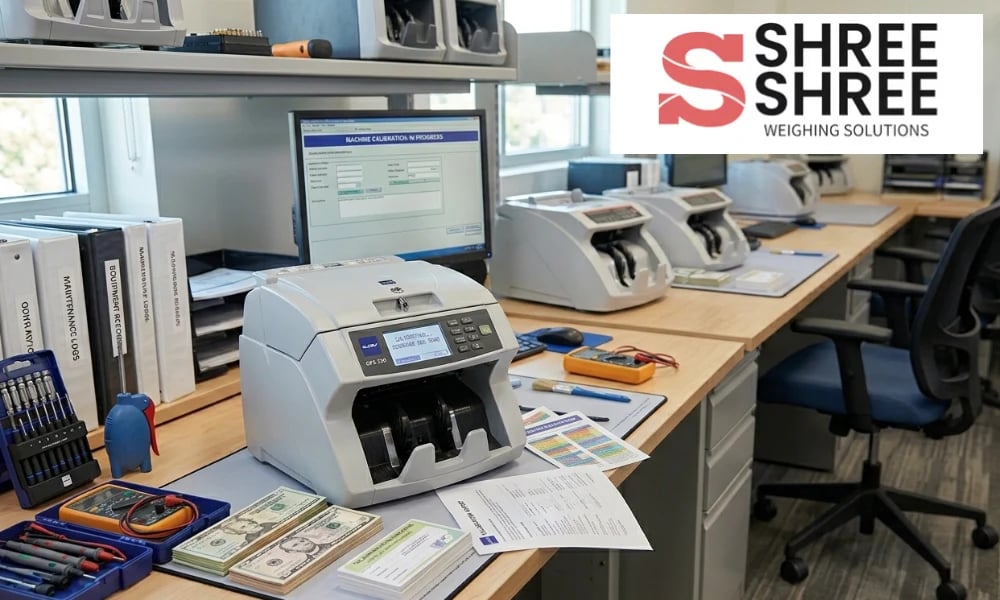
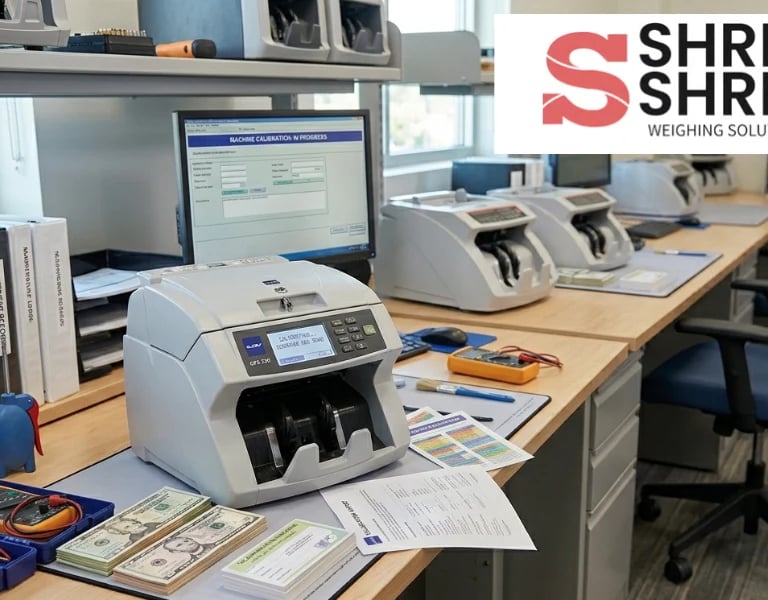
A properly calibrated cash counting machine doesn't just count faster than a human can. It counts accurately, consistently, and reliably under all sorts of conditions. When you understand what calibration actually involves and why Indian manufacturers have become so good at it, you can make smarter decisions about what equipment to buy and who to trust with your business finances.
What Calibration Actually Means
Calibration is the process of adjusting a machine so that it measures what it's supposed to measure. For a currency counting machine, this means ensuring the sensors correctly identify each note, regardless of its condition, age, or handling. A brand new crisp hundred-rupee note feels completely different from a worn ten-year-old five-hundred-rupee note. The machine needs to recognize both as valid currency and count them correctly.
Over time, sensors drift. Dust accumulates. Mechanical parts wear. The software that runs the detection algorithms gets outdated. Without recalibration, a machine that once counted with 99.9% accuracy might drop to 98% or lower. In a business running through lakhs of rupees daily, that 1% error translates to real money lost or gained unpredictably.
Calibration isn't a one-time event. It's an ongoing relationship between your equipment and the technical standards that define accurate counting. Indian manufacturers understand this better than most because they design machines for the unique conditions found across India's diverse currency ecosystem.
Why Indian Manufacturers Excel at This
India presents specific challenges that have forced domestic manufacturers to innovate. The currency in daily circulation varies enormously from brand new notes to ones that have been folded, crumpled, and well-used. Currency-counting-machine manufacturers in India build their equipment to handle this variability without constant failures.
These manufacturers employ teams of engineers who continuously test machines against actual currency in circulation. They maintain close relationships with Reserve Bank of India guidelines and update their detection algorithms whenever new security features are introduced into banknotes. This matters because older machines might not recognize newer notes correctly, and reputable manufacturers provide updates to handle these changes.
The best currency counting machine supplier relationships go beyond initial sales. They offer recalibration services, either through technician visits or by providing detailed protocols for in-house checks. When you're evaluating suppliers, ask specifically about their calibration support what happens after you buy the machine, not just before.
A trustworthy currency counting machine supplier will explain how often their machines need recalibration and what the process involves. They won't gloss over this detail because it directly affects whether you keep coming back for service agreements.
What Your Business Loses When Calibration Is Ignored
The most obvious loss is financial. An inaccurate machine either overcounts or undercounts, and in business environments, errors tend to cluster in one direction. If your machine systematically undercounts by even half a percent, you're systematically losing money across every cash transaction.
Beyond direct losses, there's the trust factor. Your accounting team spends hours trying to reconcile discrepancies. Your auditors ask questions you cannot answer confidently. Your staff begins to question whether the machine or the person using it is at fault, creating friction that affects workplace morale.
In regulated industries, inaccurate cash handling can trigger compliance issues. Businesses in retail, banking, and hospitality face audits where you need to demonstrate that your counting processes meet reasonable standards of accuracy. A machine with documented calibration history protects you in these situations.
The time cost matters too. Employees manually recounting to verify machine results are doing work that shouldn't be necessary. Their hourly wages add up, and the opportunity cost of their skills being spent on tasks a properly functioning machine should handle is considerable.
How Calibration Works in Practice
Most modern machines use a combination of optical sensors, magnetic detection, and dimensional analysis to identify and count notes. Each of these systems needs periodic checking and adjustment.
Optical sensors measure light reflection and transmission through paper. Different inks, security threads, and watermarks affect these readings in specific ways. Calibration involves testing against known standard notes and adjusting sensitivity thresholds so the machine correctly identifies genuine currency while rejecting counterfeits.
Magnetic sensors detect the magnetic properties of ink used in Indian currency. These properties can change as notes age and handle exposure to moisture and oils from repeated touch. Proper calibration ensures the machine stays sensitive enough to detect genuine security features without triggering false positives on damaged or imitation notes.
Dimensional analysis measures the physical size of each note as it passes through. Calibration here involves ensuring the sensors accurately measure different note sizes and properly reject notes that are torn, folded, or partially obscured.
The process typically takes an experienced technician between thirty minutes and two hours, depending on machine complexity. Some advanced models include self-diagnostic features that guide you through basic checks, but full calibration still requires the right equipment and reference standards.
Choosing Equipment That Supports Accurate Counting
Not all machines are built to the same standards. When you're comparing options, look beyond the price tag and speed ratings. The accuracy specification matters more than the counting speed for most business applications.
A machine claiming 99.9% accuracy under test conditions might only achieve 98.5% in daily use with well-circulated notes. Manufacturers who publish accuracy data under real-world conditions, not just perfect laboratory conditions, give you a more honest picture.
Consider the machine's sensor technology and whether the manufacturer provides ongoing software updates. A cash counting machine that cannot be updated will slowly become less accurate as currency designs change. The best currency counting machine manufacturer relationships include clear information about update availability and support timelines.
Ask about the recalibration requirements before you buy. Some machines need professional recalibration every three months; others can go a year or more between services. Factor this ongoing cost into your purchasing decision.
Building a Long-Term Relationship With Your Supplier
The transaction where you buy the machine is just the beginning of what should be a lasting relationship. Your currency counting machine supplier should become a resource for your cash handling operations, not just a vendor who disappears after the sale.
Look for suppliers who offer training on proper machine use, not just a quick setup. The way your staff operates the machine affects accuracy things like how they load notes, whether they remove clips and staples, and how they maintain the feed path all influence results.
Documentation matters. Keep records of when you purchased the machine, when it was last calibrated, and what the results showed. This creates a paper trail that protects you in audits and helps you plan for ongoing maintenance.
A good supplier will remind you when calibration is due, not just wait for you to call with problems. This proactive approach catches accuracy drift before it affects your financial records.
Taking the Next Step
If your business relies on cash counting machines and you cannot remember the last time yours was professionally calibrated, that's already a problem. The longer you wait, the more potential error accumulates in your financial records.
Start by checking your current machine's last calibration date. If you don't have that information, treat it as overdue for service. Contact several currency counting machine suppliers in India and compare their calibration offerings not just their prices, but their responsiveness and willingness to explain the process.
When you invest in proper calibration, you're investing in accurate financial records, smoother audits, and peace of mind. Your business runs on trust in your numbers, trust in your processes, and trust in the equipment that handles your money. Make sure your machines deserve that trust.