
What Is a Chequered Platform Scale? Everything You Need to Know
Most people walk past weighing equipment every day without giving it a second thought at a warehouse loading dock, a factory goods-in bay, or a freight depot. But when a procurement manager or warehouse supervisor actually sits down to specify a floor scale, the questions pile up fast. Why does the surface look like that? What does the pattern actually do? And is a chequered platform scale the right choice for this particular environment, or would something else serve better?
6/25/20266 min read
This guide answers all of that. By the end, you will know what this type of scale is, why the surface design is not cosmetic, which industries rely on it most, and what specifications to check before placing an order.
What Makes a Platform Scale "Chequered"
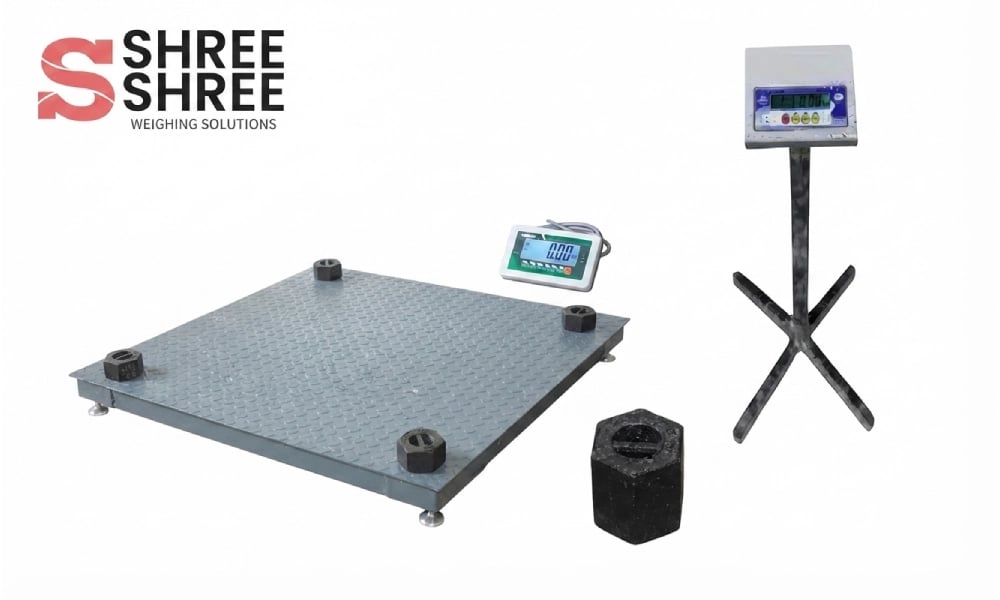
The term refers to the raised diamond or square pattern pressed or cast into the top surface of the weighing platform. It is the same anti-slip pattern you see on steel staircase treads, loading ramp plates, and heavy vehicle running boards a deliberate surface engineering choice rather than an aesthetic one.
On a flat, smooth steel platform, liquids, dust, grease, and fine particulate matter create a slip hazard the moment an operator steps onto the scale or drags a loaded pallet across it. The raised pattern on a chequered platform scale breaks surface tension and channels contaminants away from contact points, dramatically improving grip under load. In environments where water, oil, or powder is present, this is not a minor convenience it is a safety requirement.
The patterning also adds structural rigidity to the plate. A chequered sheet resists flex under lateral movement better than a plain sheet of equivalent thickness, which matters when goods are dragged or rolled across the surface rather than lifted cleanly on and off.
How the Weighing Mechanism Actually Works
Load Cells and Platform Design
Beneath the patterned top plate sits the actual measurement system. Most industrial platform scales use load cells typically four, one positioned under each corner of the platform that convert mechanical force into an electrical signal. The signal is processed by an indicator or junction box and displayed as a weight reading.
The platform's job is to transmit the load evenly across all four cells. This is why platform rigidity matters: if the top plate flexes significantly under an off-centre load, the weight distribution across the cells becomes uneven and the reading suffers. The chequered steel construction contributes to maintaining this structural integrity without adding excessive mass to the platform itself.
Digital Indicators and Connectivity
The display unit attached to a platform scale ranges from a simple numeric LCD to a full indicator capable of communicating with warehouse management systems, printers, and databases via RS232, USB, or Ethernet. For basic check-weighing confirming a bag of cement or a box of hardware is within tolerance a standalone display is sufficient. For operations that need weight data logged automatically against batch records or dispatch orders, a networked indicator is worth specifying from the outset.
Calibration is handled through the indicator. Legal-for-trade models, which are required for commercial transactions where the weight determines the sale price, carry national calibration approval markings and must be recalibrated at intervals set by local trading standards regulations.
Where Chequered Platform Scales Are Used
The industries that rely on this type of scale tend to share a few characteristics: heavy goods, high throughput, and environments where the floor sees significant contamination from the work itself.
Food production and packaging facilities use floor scales constantly weighing ingredients in bulk, checking filled container weights, and confirming dispatch pallet totals. Stainless steel variants of the chequered platform scale are specified here because they withstand washdown cleaning without corroding. The raised surface pattern is particularly valuable in wet processing areas where water pools on flat surfaces.
Logistics and freight operations use large-capacity floor scales at goods-in and goods-out points to confirm parcel and pallet weights match manifests. Discrepancies caught here prevent incorrect freight charges and identify short deliveries before goods enter stock. The scale surface takes punishment from pallet trucks, sack trucks, and rolling cages daily, and the chequered plate handles that abrasion far better than a painted flat surface.
Manufacturing and industrial production settings use them for raw material intake, batch weighing, and finished goods verification. A steel fabrication shop weighing steel offcuts, a chemical plant weighing reagent drums, or a building materials supplier confirming aggregate bag weights all of these applications benefit from a scale that handles rough, heavy, irregular loads without degrading in accuracy or surface condition.
Vague weight capacity claims like "suitable for all luggage" should be verified against an actual kilogram or pound figure. Strap attachment quality is worth scrutinising in product photos a thin metal hook soldered to a plastic body will deform under repeated heavy loads. Reviews mentioning inconsistent readings across multiple uses of the same bag are a reliable signal to move on.
Agriculture and rural trade presents some of the harshest conditions any weighing equipment faces: mud, moisture, temperature swings, and awkwardly shaped loads. Grain sacks, feed pallets, and goods through farm supply operations all depend on accurate, durable floor weighing.
Key Specifications to Understand Before Buying
Capacity and Readability
Capacity is the maximum weight the scale can measure typically expressed in kilograms, and ranging from a few hundred kg for light industrial models up to 5,000 kg or more for heavy-duty freight platforms. Readability is the smallest increment the display resolves, such as 100 g, 200 g, or 500 g. A scale with 2,000 kg capacity and 500 g readability is suited to pallet weighing where fine measurement is not needed. A scale with 300 kg capacity and 50 g readability suits packaged goods verification where tighter tolerances matter.
Specifying too much capacity can reduce accuracy at the low end of the range a 5,000 kg scale reading a 10 kg item is operating at 0.2% of its capacity, where calibration variation has a proportionally larger effect on the reading.
Platform Size
Platform sizes for general warehousing typically run from 800mm x 800mm up to 1500mm x 1500mm or larger for pallet applications. The platform must be large enough that the load sits fully within the boundaries a pallet overhanging the edges introduces bending forces the load cells are not designed to handle, making the reading unreliable.
IP Rating and Surface Material
The Ingress Protection (IP) rating tells you how well the scale is sealed against water and dust. IP65 means dust-tight and protected against water jets appropriate for washdown environments. IP67 adds protection against temporary submersion. In dry warehouse environments, a lower IP rating is acceptable and typically costs less.
Standard mild steel with an epoxy coating suits dry indoor use. Stainless steel is the correct specification anywhere that cleaning chemicals, moisture, or food contact is involved.
Ramp and Recess Options
Many chequered platform scales are available with access ramps, which allow pallet trucks and trolleys to roll directly onto the platform surface. Some models are designed to be recessed flush into the floor, eliminating the step-up entirely. Floor recess installation requires advance planning the recess needs to be cut to depth, and drainage must be considered if the environment is wet.
Common Mistakes When Specifying a Platform Scale
Buying on capacity alone without checking platform size leads to scales where pallet loads consistently overhang the edges. Ignoring IP rating in environments that seem dry but experience occasional spillage leads to early indicator failure and corroded load cells. Specifying legal-for-trade approval when the scale is only used for internal stock control adds cost without benefit that certification matters only when the weight reading forms part of a commercial transaction.
Overlooking cable management is a frequent oversight. Floor scales sit on the ground, and the cable connecting the platform to the indicator gets walked on and run over by pallet trucks. Armoured cable options and floor-level cable channels are worth specifying when the indicator is wall- or post-mounted away from the platform.
Failing to plan a calibration schedule is a maintenance gap that shows up over time. All load cell scales drift slightly with use. Annual calibration for general use more frequent for high-throughput or legal-for-trade applications keeps accuracy within specification and satisfies audit requirements.
Choosing the Right Chequered Platform Scale for Your Operation
The decision comes down to matching the specification to the actual working conditions rather than buying the most capable model available. Start with the heaviest load you will ever need to weigh, then select a capacity 20–30% above that figure to give the load cells comfortable operating headroom. Match the platform size to your largest typical load with room to spare. Confirm the IP rating against your cleaning and environmental conditions. Then consider whether legal-for-trade approval is genuinely required for your use case.
A chequered platform scale correctly specified will handle years of daily industrial use without meaningful degradation in accuracy, surface condition, or structural integrity. One underspecified for its environment will cost more in repairs, recalibration, and replacement than any initial price saving justified.
If you are sourcing a scale for a new facility or replacing an ageing unit, take the time to share your full operating conditions load types, floor space, cleaning regime, and data connectivity needs with the supplier before choosing a model. The surface pattern on the platform is the most visible part of the product. The specification work done before purchase is what determines whether it does its job well for the long term.