
Baby Weighing Scale Buying Guide What Every Parent and Clinic Needs to Know
The moment a baby is born, one of the first things a nurse or doctor does is put them on a scale. That single number the birth weight kicks off a lifetime of health tracking. And in the weeks and months that follow, weight remains one of the clearest signals that a baby is feeding well, growing properly, and developing as they should.
5/16/20268 min read
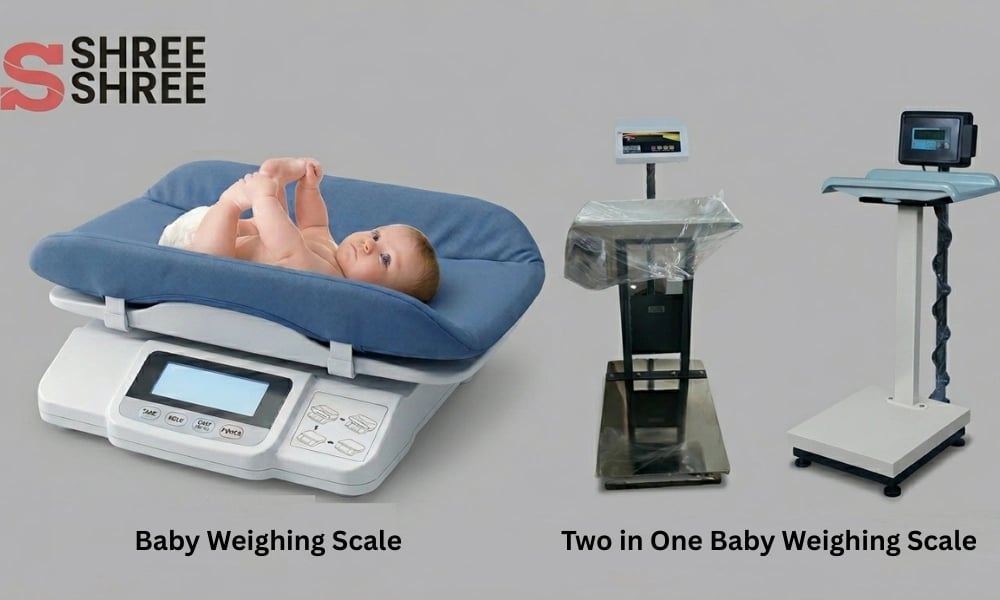
Whether you're a new parent trying to monitor your new-born at home, or a paediatrician running a busy clinic, a good baby weighing scale is not a luxury. It's a tool you'll rely on regularly and one where accuracy, reliability, and ease of use genuinely matter.
But walk into any baby products store or browse online, and you'll find dozens of options. Digital scales, mechanical scales, flat designs, curved bowl designs, scales with memory functions, scales that sync to apps. It can get overwhelming fast.
This guide is here to cut through all of that. By the end, you'll know exactly what to look for, what to avoid, and which type of baby weighing scale makes the most sense for your specific situation.
Why Baby Weight Matters More Than You Think
Before getting into the buying guide itself, it's worth understanding why weight tracking is taken so seriously in infant care.
In the first few days after birth, it's completely normal for a baby to lose some weight. Most new-borns lose between 5% and 10% of their birth weight in the first week. But after that, the expectation is steady gain typically around 150 to 200 grams per week in the early months.
When a baby isn't gaining weight at the expected rate, it can signal feeding difficulties, digestive issues, or underlying health concerns that need attention. Catching these early makes an enormous difference. A baby who is weighed regularly and consistently gives caregivers the data they need to spot problems early and act quickly.
That's why clinics weigh babies at every check-up. And increasingly, it's why parents are choosing to have a scale at home especially during the breastfeeding period, when it can be difficult to know exactly how much milk the baby is getting.
Types of Baby Weighing Scales
Not all baby scales are the same. Understanding the different types helps you figure out which one suits your needs.
Digital Baby Scales
Digital scales are the most widely used today both in homes and clinical settings. They use electronic sensors to measure weight and display the result on a screen. They're easy to read, generally accurate, and come with a range of useful features.
Most digital baby scales display weight in grams, making it easier to track small changes over time. A new-born gaining 20 grams a day is healthy progress, but that kind of precision is impossible to see on a scale that only shows kilograms.
For home use, digital scales with a smooth, flat tray or a gently curved bowl design are comfortable for the baby and easy for the parent to use alone. For clinical settings, digital scales with a sturdier build, higher weight capacity, and data logging capabilities are more appropriate.
Mechanical Baby Scales
These are the old-style scales with a dial and a pointer. They don't require batteries and are generally more durable in terms of not having electronic components to fail. However, they're not nearly as precise as digital scales, and reading the dial accurately is harder than glancing at a digital display.
Mechanical scales are rarely recommended for new-born monitoring where precision matters. They're better suited for quick, general reference rather than careful health tracking.
Two in One Baby Weighing Scale
A two in one baby weighing scale is exactly what it sounds like a scale that serves two purposes in one device. Most commonly, this means a baby scale that also functions as a regular household scale for weighing adults or objects, or a scale designed to measure both babies and toddlers as they grow. Some models combine a baby scale with a measuring board to track both weight and length at the same time.
For parents, a two in one baby weighing scale offers real practical value. You're not buying a product that will be useful for just six months before your baby outgrows it. Instead, you get a device that evolves with your child's needs or serves multiple purposes around the home. It's a smarter spend, especially for parents who want a good scale but don't want to invest in something highly specialised that they'll need to replace soon.
For clinics and health centres, combination models that measure both weight and length are particularly useful for infant assessment, allowing staff to capture two key growth indicators in a single workflow without needing separate equipment.
Key Features to Look For
Now that you know the types, here's what to evaluate when comparing specific models.
Accuracy and Precision
This is non-negotiable. For new-borns and young infants, the scale needs to measure in increments of at least 10 grams and ideally 5 grams. A scale that only shows changes of 50 or 100 grams at a time misses the small but meaningful shifts that matter most in the early weeks.
Look for scales that have been verified or calibrated to a medical standard. For clinical use, this is essential. For home use, it's still worth prioritising the peace of mind that comes from an accurate reading is worth paying a bit more for.
Weight Capacity
Babies grow fast. A scale with a maximum capacity of only 10 kilograms may be outgrown by the time your baby reaches 12 to 15 months. Look for scales with a capacity of at least 20 kilograms if you want the scale to remain useful through the toddler years.
For clinics, a higher capacity is almost always better it gives the scale longevity and ensures it remains functional as children come in at different ages and sizes.
Tare / Hold Function
The tare function allows you to reset the scale to zero with a cloth, nappy, or small blanket already on it. This is incredibly useful you can place a comfortable layer on the scale, tare it to zero, and then weigh the baby without the reading being affected by the extra material.
The hold function is equally practical. Babies don't stay still. A hold function captures the weight reading and keeps it displayed even after the baby is removed so you don't need to try to read the screen while simultaneously managing a wriggling infant.
Both of these features should be considered essential rather than optional.
Unit Switching
The ability to switch between grams, kilograms, and pounds is useful especially if you're sharing results with a healthcare provider in a different country, or if you're an expat parent accustomed to a different measurement system. Most decent digital baby scales offer this.
Display Visibility
A large, clear display with good contrast makes a real difference particularly in low light or when you're tired (which, as any new parent will confirm, is most of the time). Backlit displays are particularly useful for night-time weighing.
Build and Surface Material
The surface your baby lies on should be easy to clean. Babies have a tendency to make messes at the most inconvenient moments. A removable, washable cover or a smooth surface that can be wiped down with a damp cloth is an important practical consideration.
For clinical settings, the material should be able to withstand regular disinfection without degrading. Surfaces that stain, crack, or absorb moisture are a problem in a medical environment.
Battery Life and Power Options
Digital scales typically run on batteries. Check how long the batteries last with normal use, and whether the scale has an auto-off function to preserve battery life when not in use. Some models also offer a mains power option, which is convenient for clinics where the scale is used continuously throughout the day.
Connectivity and App Integration
Some modern baby weighing scales connect to smartphones via Bluetooth and sync weight data to a tracking app. For parents who want to maintain a detailed growth chart and share it easily with their doctor, this can be a genuinely useful feature.
That said, app connectivity adds cost and complexity. If you just want an accurate reading and a clear display, you don't need it. It's a nice-to-have, not a must-have.
What Parents Specifically Need
If you're a parent buying a baby weighing scale for home use, here's a simplified checklist of what actually matters:
Accuracy in grams: You need to be able to see small changes not just whether your baby is broadly getting bigger, but whether they're gaining at a healthy rate week to week.
Ease of use: You'll often be using this alone, with a baby in one arm. A scale that's simple to operate, has a clear hold function, and doesn't require multiple button presses to get a reading is far more practical than a feature-heavy model that takes concentration to operate.
Comfortable baby tray: A curved, bowl-shaped tray naturally keeps a new-born centred and comfortable. As the baby grows, a flat tray becomes more appropriate which is one reason a two in one baby weighing scale with adaptable tray options is worth considering.
Compact storage: Home space is precious, especially with a new baby around. A scale that can be stored easily when not in use is a practical advantage.
Realistic lifespan: Think about how long you'll actually use it. If you plan to have more children, or want to track weight through the toddler years, invest in a scale with enough capacity and durability to go the distance.
What Clinics and Healthcare Providers Need
Clinical requirements are more demanding. Here's what healthcare settings should prioritise:
Medical-grade accuracy: Clinical decisions are based on these readings. A scale used in a clinic should meet or exceed medical device accuracy standards, ideally verified by a calibration certificate.
Durability: Clinic scales are used many times a day, by multiple staff members, with babies of varying sizes and temperaments. They need to be physically robust and easy to maintain.
Hygiene: The surface must withstand repeated disinfection. Seams and crevices that trap dirt or moisture are a problem. Smooth, sealed surfaces are far more appropriate.
Higher weight range: A clinic serves babies and toddlers of all ages and sizes. A scale with a broader weight capacity handles this range without needing a separate device for older children.
Data recording: For clinics managing multiple patients, a scale that can store readings or connect to a computer system streamlines record-keeping. Some professional baby weighing scale models include USB connectivity or memory functions that log readings with timestamps.
Stable, anti-slip base: In a busy clinic, a scale that shifts or tips is a safety hazard. A wide, stable base with anti-slip feet is a basic requirement.
Common Mistakes to Avoid
Even well-intentioned buyers make avoidable errors. Here are the most common ones:
Buying based on price alone: The cheapest scales often sacrifice precision. For something as important as tracking infant health, this is a poor trade-off.
Ignoring the weight range: A scale that maxes out at 10 kg is fine for a new-born, but your baby will outgrow it within the first year. Think ahead.
Skipping the hold function: Without it, getting an accurate reading from a moving baby becomes a two-person job.
Prioritising looks over function: Some scales look stylish but have small displays, poorly positioned controls, or curved bases that make the reading less stable. Function should always come before aesthetics.
Not checking for calibration drift: Over time, even good scales can drift slightly out of calibration. Scales used in clinical settings should be calibrated regularly. Home scales should be tested periodically against a known weight.
A baby weighing scale is one of those purchases that quietly earns its place. You'll use it far more than you expect in those early months and every reading gives you a clearer picture of how your baby is doing.
For parents, the right scale is one that's accurate enough to be trusted, simple enough to use without a second pair of hands, and durable enough to last through the months (and children) ahead. For clinics, it's one that meets medical standards, handles the demands of a busy practice, and makes the job of tracking infant health as efficient as possible.
Take the time to compare your options, focus on the features that actually matter for your situation, and don't let a low price tag lead you to a tool that lets you down when it matters most.
A healthy, thriving baby is the goal. A reliable baby weighing scale is one small but important part of getting there.